[ . BACK to DARUMA MUSEUM TOP . ]
. Japan - Shrines and Temples - Index .
. Buddhist Temples and their Legends .
. Ise Saigoku 33 Kannon 伊勢西国三十三所観音巡礼 Pilgrimage .
::::::::::::::::::::::::::::::::::::::::::::::::::::::::::::::::::::::::::::::::::::::::::::::::::::::::::::::::::::::::::::::::::::::::::::::::::::::::::::::::::::::::::::::
Renkooji 蓮光寺 Renko-Ji, Anoda
新宮山 Shingūzan 蓮光寺 Renkoji
亀山市阿野田町2246 / Mie Prefecture, Kameyama city, Anoda town 2246
The Kannon statue is 十一面観音 Juichimen Kannon.
Jūichimen Kannon statue of Renkō-ji is designated as Kameyama city’s Cultural Property.
- quote
According to the legend Jūichimen Kannon (Eleven-Faced Kannon) enshrined in the Kannon Hall of Renkō-ji temple
was carved by 源信 Genshin (also known as 恵心僧都 Eshin Sōzu, 942-1017).
The statue was originally worshiped in 安養寺 Anyō-ji temple, which belonged to Jōdo sect of Buddhism.
During the Keichō period (1596-1615) Anyō-ji lost its buildings in a fire,
but fortunately Jūichimen Kannon was taken out in time and saved from burning.
Since then it was protected by the local people.
Since 1669, after 板倉重常 Itakura Shigetsune (1643-1688) became a new Lord of the Kameyama Castle,
all the following Lords of the castle and their wives were devoted believers.
They would frequently offer donations for flowers, incense and candles.
Shigetsune’s main wife 照光院 Shōkōin (secular name 筆子 Fudeko) was especially devoted believer of Goddess Kannon.
In 1695 she moved the temple to nowadays Tenjin area in Kameyama city
and changed its name to 慈眼寺 Jigen-ji.
The temple became a branch temple of 照光寺 Shōkō-ji from Nomura area in Kameyama
and changed its affiliation to Nichiren sect of Buddhism.
After the Meiji Restoration in the middle of the 19th Century,
Jigen-ji not having an abbot and supporters was closed.
Its buildings were torn down and two statues were moved to other temples.
The first Jūichimen Kannon, together with other Buddhist statues and ritual utensils, was moved to Shōkō-ji.
The second Jūichimen Kannon was moved to Renkō-ji and enshrined in a newly built 観音堂 Kannon Hall.
This Kannon Hall wore off with time and had to be rebuilt.
Thanks to the donations from the local community,
the new Kannon Hall made from hinoki cypress was finished
and the official celebration ceremony was held on March 17th 1982.
To commemorate this event a stone pagoda with a text:
Temple Number 19 of Ise 33 Temples Pilgrimage
was also erected.
- source : renkoji ...
. Genshin 恵心僧都原信 Eshin Sozu Genshin (942 - 1017) .
..............................................................................................................................................
shuin 朱印 stamp
.......................................................................
- - - - - Reference of the temple
- reference source : isekannon.jp/english Renkō-ji ... -
- reference source : nippon-reijo.jimdofree ... -
::::::::::::::::::::::::::::::::::::::::::::::::::::::::::::::::::::::::::::::::::::::::::::::::::::::::::::::::::::::::::::::::::::::::::::::::::::::::::::::::::::::::::::::
This temple is former Nr. 19 of the pilgrimage
. Ise Saigoku 33 Kannon 伊勢西国三十三所観音巡礼 Pilgrimage .
. Kannon Bosatsu 観音菩薩 Avalokiteshvara .
. Juichimen Kannon 十一面観音 Senju Kannon 千手観音 Kannon with 11 faces and 1000 arms .
::::::::::::::::::::::::::::::::::::::::::::::::::::::::::::::::::::::::::::::::::::::::::::::::::::::::::::::::::::::::::::::::::::::::::::::::::::::::::::::::::::::::::::::
. Japanese Legends - 伝説 民話 昔話 – ABC-List .
....................................................................... Kanagawa 神奈川県
高座郡 Koza district
mochiage Jizo 持上げ地蔵 lifting the Jizo statue
If someone can lift the statue of Jizo Bosatsu at 蓮光寺 the Temple Renko-Ji
and it feels very light, his wish will be fullfilled.
. Legends about Jizo Bosatsu .
....................................................................... Miyagi 宮城県
仙台市 Sendai 泉区 Izumi ward
oiwake Nyorai 笈分如来 Nyorai at the crossroads
The Ajari priest Kakumei 覚明阿闍梨 from 慈恩寺 the Temple Jion-Ji
at 出羽国寒河 Samukawa in Dewa no Kuni had a visionary dream
to ask 安阿弥快慶 the statue carver Kaikei from Kyoto to make a statue of Amida Nyorai.
Kaikei found his statue so wonderful, he did not want to hand it to Kakumei and told him it was not yet finished.
When Kakumei came back a year later, Kaikei said he would go with him to 近江の草津 Kusatsu in Omi.
In parting they found that there were two statues and they could not find out
which was the real one and with was a fake.
So each took one statue and they left for home.
This is why the statues are called "at the crossroad" or
"miwake no Nyorai" 身分け如来 Nyorai of two bodies.
Kakumei went down South downriver, had a dream of of a place where he planted a large tree.
So he moved to this place with the statue.
The other statue came to 蓮光寺 the Temple Renko-Ji in Kyoto.
Look at the photo here:
- 木造阿弥陀如来立像 - Mokuzo Amidanyorai Ryuzo -
..............................................................................................................................................
- reference : Nichibun Yokai Database -
::::::::::::::::::::::::::::::::::::::::::::::::::::::::::::::::::::::::::::::::::::::::::::::::::::::::::::::::::::::::::::::::::::::::::::::::::::::::::::::::::::::::::::::
. Temples with legends .
. Japanese Legends - 伝説 民話 昔話 – ABC-List .
. Japan - Shrines and Temples - Index .
[ . BACK to DARUMA MUSEUM . TOP . ]
[ . BACK to WORLDKIGO . TOP . ]
- - #renkoji #renkooji #isesaigoku ##isesaikoku ##isekannon -
::::::::::::::::::::::::::::::::::::::::::::::::::::::::::::::::::::::::::::::::::::::::::::::::::::::::::::::::::::::::::::::::::::::::::::::::::::::::::::::::::::::::::::::
2022/10/21
2022/10/20
Jiganji Fudo Sasame
[ . BACK to DARUMA MUSEUM TOP . ]
. Adachi 100 Fudo Temples 足立百不動尊霊場 Pilgrimage .
::::::::::::::::::::::::::::::::::::::::::::::::::::::::::::::::::::::::::::::::::::::::::::::::::::::::::::::::::::::::::::::::::::::::::::::::::::::::::::::::::::::::::::::
Jiganji 慈眼寺 Jigan-Ji, Sasame
東光山 Tokozan 慈眼寺 Jiganji
戸田市笹目5-12-11 / Toda city, Sasame
The main statue is 薬師 Yakushi Nyorai.
The date of the founding is not clear.
- Chant of the temple
のもやまも しける笹目のさとにたち 慈しむ眼の 寺の金剛
In the compound is a statue of 青面金剛 Shomen Kongo.
. Shōmen Kongō 青面金剛 with a blue face .
In the compound are some stone monuments.
In the compound are six Jizo Statues, made in 1812.
..............................................................................................................................................
Also on the following pilgrimages :
. Kita Adachi 88 Fudo Temples 北足立八十八ヵ所霊場 . - Nr. 61
. Adachi 12 Yakushi Pilgrimage 薬師足立十二札所 . - Nr. 10
.......................................................................
- - - - - Reference of the Temple
- source : itasan31078...
- reference source : tesshow -
- reference source : hanaetabi.fc2web.com/hudou/index ... -
- reference source : nippon-reijo.jimdofree ... -
::::::::::::::::::::::::::::::::::::::::::::::::::::::::::::::::::::::::::::::::::::::::::::::::::::::::::::::::::::::::::::::::::::::::::::::::::::::::::::::::::::::::::::::
This Temple is Nr. 44 of the
. Adachi 100 Fudo Temples 足立百不動尊霊場 Pilgrimage .
::::::::::::::::::::::::::::::::::::::::::::::::::::::::::::::::::::::::::::::::::::::::::::::::::::::::::::::::::::::::::::::::::::::::::::::::::::::::::::::::::::::::::::::
. Japanese Legends - 伝説 民話 昔話 – ABC-List .
. Legends about Temples names Jigan-Ji .
::::::::::::::::::::::::::::::::::::::::::::::::::::::::::::::::::::::::::::::::::::::::::::::::::::::::::::::::::::::::::::::::::::::::::::::::::::::::::::::::::::::::::::::
. Temples with legends .
. Kita Adachi 88 Fudo Temples 北足立八十八ヵ所霊場 .
. Japanese Legends - 伝説 民話 昔話 – ABC-List .
. Japan - Shrines and Temples - Index .
[ . BACK to DARUMA MUSEUM . TOP . ]
[ . BACK to WORLDKIGO . TOP . ]
- - #jiganji #adachifudo #busoo #busou -
::::::::::::::::::::::::::::::::::::::::::::::::::::::::::::::::::::::::::::::::::::::::::::::::::::::::::::::::::::::::::::::::::::::::::::::::::::::::::::::::::::::::::::::
. Adachi 100 Fudo Temples 足立百不動尊霊場 Pilgrimage .
::::::::::::::::::::::::::::::::::::::::::::::::::::::::::::::::::::::::::::::::::::::::::::::::::::::::::::::::::::::::::::::::::::::::::::::::::::::::::::::::::::::::::::::
Jiganji 慈眼寺 Jigan-Ji, Sasame
東光山 Tokozan 慈眼寺 Jiganji
戸田市笹目5-12-11 / Toda city, Sasame
The main statue is 薬師 Yakushi Nyorai.
The date of the founding is not clear.
- Chant of the temple
のもやまも しける笹目のさとにたち 慈しむ眼の 寺の金剛
In the compound is a statue of 青面金剛 Shomen Kongo.
. Shōmen Kongō 青面金剛 with a blue face .
In the compound are some stone monuments.
In the compound are six Jizo Statues, made in 1812.
..............................................................................................................................................
Also on the following pilgrimages :
. Kita Adachi 88 Fudo Temples 北足立八十八ヵ所霊場 . - Nr. 61
. Adachi 12 Yakushi Pilgrimage 薬師足立十二札所 . - Nr. 10
.......................................................................
- - - - - Reference of the Temple
- source : itasan31078...
- reference source : tesshow -
- reference source : hanaetabi.fc2web.com/hudou/index ... -
- reference source : nippon-reijo.jimdofree ... -
::::::::::::::::::::::::::::::::::::::::::::::::::::::::::::::::::::::::::::::::::::::::::::::::::::::::::::::::::::::::::::::::::::::::::::::::::::::::::::::::::::::::::::::
This Temple is Nr. 44 of the
. Adachi 100 Fudo Temples 足立百不動尊霊場 Pilgrimage .
::::::::::::::::::::::::::::::::::::::::::::::::::::::::::::::::::::::::::::::::::::::::::::::::::::::::::::::::::::::::::::::::::::::::::::::::::::::::::::::::::::::::::::::
. Japanese Legends - 伝説 民話 昔話 – ABC-List .
. Legends about Temples names Jigan-Ji .
::::::::::::::::::::::::::::::::::::::::::::::::::::::::::::::::::::::::::::::::::::::::::::::::::::::::::::::::::::::::::::::::::::::::::::::::::::::::::::::::::::::::::::::
. Temples with legends .
. Kita Adachi 88 Fudo Temples 北足立八十八ヵ所霊場 .
. Japanese Legends - 伝説 民話 昔話 – ABC-List .
. Japan - Shrines and Temples - Index .
[ . BACK to DARUMA MUSEUM . TOP . ]
[ . BACK to WORLDKIGO . TOP . ]
- - #jiganji #adachifudo #busoo #busou -
::::::::::::::::::::::::::::::::::::::::::::::::::::::::::::::::::::::::::::::::::::::::::::::::::::::::::::::::::::::::::::::::::::::::::::::::::::::::::::::::::::::::::::::
2022/10/19
Ioji Yakushi Shingae
[ . BACK to DARUMA MUSEUM TOP . ]
. Japan - Shrines and Temples - Index .
. Buddhist Temples and their Legends .
. 49 Yakushi Temples in Kyushu 九州四十九薬師霊場 .
::::::::::::::::::::::::::::::::::::::::::::::::::::::::::::::::::::::::::::::::::::::::::::::::::::::::::::::::::::::::::::::::::::::::::::::::::::::::::::::::::::::::::::::
Iooji 薬王寺 Io--Ji, Shingae
城持山 Jojizan 薬王寺 Ioji
長崎県佐世保市新替町263 / Nagasaki, Sasebo city, Shingae town
The temple was built on the remains of 井手平城 the Idehira castle.
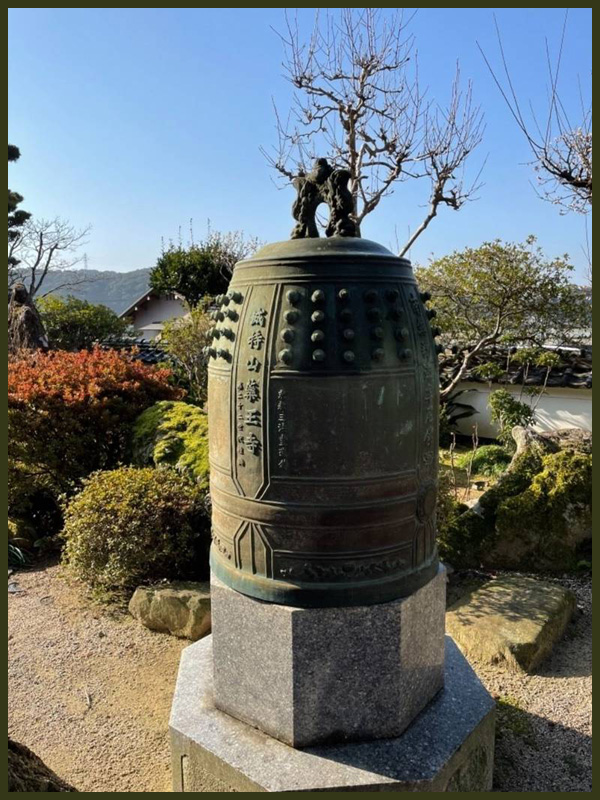
The Temple Bell
..............................................................................................................................................
shuin 朱印 stamp
.......................................................................
- - - - - Reference of the temple
- source : oyakushi.com ...
- reference source : nippon-reijo.jimdofree ... -
::::::::::::::::::::::::::::::::::::::::::::::::::::::::::::::::::::::::::::::::::::::::::::::::::::::::::::::::::::::::::::::::::::::::::::::::::::::::::::::::::::::::::::::
This temple is Nr. 36 of the pilgrimage
. 49 Yakushi Temples in Kyushu 九州四十九薬師霊場 .
. 薬師如来 Yakushi Nyorai Bhaisajyaguru .
the Buddha of Medicine and Healing
::::::::::::::::::::::::::::::::::::::::::::::::::::::::::::::::::::::::::::::::::::::::::::::::::::::::::::::::::::::::::::::::::::::::::::::::::::::::::::::::::::::::::::::
Idehira castle 井出平城
戦国時代も終わりを迎える頃、三川内は平戸松浦氏の領地でした。そして、
小森川を挟んで向こう側が大村領だったと考えられています。
井出平城は広田城と並び、平戸松浦氏の最前線の城だったようです。
1586年4月にこの城を大村氏がひそかに島原の有馬氏、西有田氏、唐津の波多氏と連合して攻めました。
城内には城主の岡甚右衛門(おかじんえもん) Oka Jinemon を始め300人ほどの兵が守っていましたが、不意をついた夜襲であったらしく、この戦いで城主の岡甚右衛門と長男、次男、
そして副将の堀江大学(ほりえだいがく) Horie Daigaku などほぼ全員が討ち取られてしまいました。
落城後、広田城で大村の連合軍を追い返した平戸松浦氏 Hirado Matsuura は井出平城の戦いでの戦死者を弔うために、城の麓(ふもと)に薬王寺を立てました。
- reference source : idehirajou ... -
::::::::::::::::::::::::::::::::::::::::::::::::::::::::::::::::::::::::::::::::::::::::::::::::::::::::::::::::::::::::::::::::::::::::::::::::::::::::::::::::::::::::::::::
. Japanese Legends - 伝説 民話 昔話 – ABC-List .
. Legends about Yakuo-Ji Temples .
::::::::::::::::::::::::::::::::::::::::::::::::::::::::::::::::::::::::::::::::::::::::::::::::::::::::::::::::::::::::::::::::::::::::::::::::::::::::::::::::::::::::::::::
. Temples with legends .
. Japanese Legends - 伝説 民話 昔話 – ABC-List .
. Japan - Shrines and Temples - Index .
[ . BACK to DARUMA MUSEUM . TOP . ]
[ . BACK to WORLDKIGO . TOP . ]
- - #yakuoji #yakuooji #idehira #yakushikyushu #yakushipilgrims #薬師如来 -
::::::::::::::::::::::::::::::::::::::::::::::::::::::::::::::::::::::::::::::::::::::::::::::::::::::::::::::::::::::::::::::::::::::::::::::::::::::::::::::::::::::::::::::
. Japan - Shrines and Temples - Index .
. Buddhist Temples and their Legends .
. 49 Yakushi Temples in Kyushu 九州四十九薬師霊場 .
::::::::::::::::::::::::::::::::::::::::::::::::::::::::::::::::::::::::::::::::::::::::::::::::::::::::::::::::::::::::::::::::::::::::::::::::::::::::::::::::::::::::::::::
Iooji 薬王寺 Io--Ji, Shingae
城持山 Jojizan 薬王寺 Ioji
長崎県佐世保市新替町263 / Nagasaki, Sasebo city, Shingae town
The temple was built on the remains of 井手平城 the Idehira castle.
The Temple Bell
..............................................................................................................................................
shuin 朱印 stamp
.......................................................................
- - - - - Reference of the temple
- source : oyakushi.com ...
- reference source : nippon-reijo.jimdofree ... -
::::::::::::::::::::::::::::::::::::::::::::::::::::::::::::::::::::::::::::::::::::::::::::::::::::::::::::::::::::::::::::::::::::::::::::::::::::::::::::::::::::::::::::::
This temple is Nr. 36 of the pilgrimage
. 49 Yakushi Temples in Kyushu 九州四十九薬師霊場 .
. 薬師如来 Yakushi Nyorai Bhaisajyaguru .
the Buddha of Medicine and Healing
::::::::::::::::::::::::::::::::::::::::::::::::::::::::::::::::::::::::::::::::::::::::::::::::::::::::::::::::::::::::::::::::::::::::::::::::::::::::::::::::::::::::::::::
Idehira castle 井出平城
戦国時代も終わりを迎える頃、三川内は平戸松浦氏の領地でした。そして、
小森川を挟んで向こう側が大村領だったと考えられています。
井出平城は広田城と並び、平戸松浦氏の最前線の城だったようです。
1586年4月にこの城を大村氏がひそかに島原の有馬氏、西有田氏、唐津の波多氏と連合して攻めました。
城内には城主の岡甚右衛門(おかじんえもん) Oka Jinemon を始め300人ほどの兵が守っていましたが、不意をついた夜襲であったらしく、この戦いで城主の岡甚右衛門と長男、次男、
そして副将の堀江大学(ほりえだいがく) Horie Daigaku などほぼ全員が討ち取られてしまいました。
落城後、広田城で大村の連合軍を追い返した平戸松浦氏 Hirado Matsuura は井出平城の戦いでの戦死者を弔うために、城の麓(ふもと)に薬王寺を立てました。
- reference source : idehirajou ... -
::::::::::::::::::::::::::::::::::::::::::::::::::::::::::::::::::::::::::::::::::::::::::::::::::::::::::::::::::::::::::::::::::::::::::::::::::::::::::::::::::::::::::::::
. Japanese Legends - 伝説 民話 昔話 – ABC-List .
. Legends about Yakuo-Ji Temples .
::::::::::::::::::::::::::::::::::::::::::::::::::::::::::::::::::::::::::::::::::::::::::::::::::::::::::::::::::::::::::::::::::::::::::::::::::::::::::::::::::::::::::::::
. Temples with legends .
. Japanese Legends - 伝説 民話 昔話 – ABC-List .
. Japan - Shrines and Temples - Index .
[ . BACK to DARUMA MUSEUM . TOP . ]
[ . BACK to WORLDKIGO . TOP . ]
- - #yakuoji #yakuooji #idehira #yakushikyushu #yakushipilgrims #薬師如来 -
::::::::::::::::::::::::::::::::::::::::::::::::::::::::::::::::::::::::::::::::::::::::::::::::::::::::::::::::::::::::::::::::::::::::::::::::::::::::::::::::::::::::::::::
2022/10/18
Funanji Kannon Ko
[ . BACK to DARUMA MUSEUM TOP . ]
. Japan - Shrines and Temples - Index .
. Buddhist Temples and their Legends .
. Ise Saigoku 33 Kannon 伊勢西国三十三所観音巡礼 Pilgrimage .
::::::::::::::::::::::::::::::::::::::::::::::::::::::::::::::::::::::::::::::::::::::::::::::::::::::::::::::::::::::::::::::::::::::::::::::::::::::::::::::::::::::::::::::
Funanji 府南寺 Funan-Ji, Ko
泰平山Taiheizan 府南寺 Funanji
鈴鹿市国府町254 / Mie, Suzuka city, Ko
The Kannon statue is 千手観音 Senju Kannon with 1000 arms.
- Chant of the temple
色づくやうへ寺山の峯の松 風音して秋をしらせん
Pine trees changing colors at the peak of Mount Uedera.
Sound of the wind shaking the pine trees informs that the autumn has come.
The temple was founded by 聖徳太子 Prince Shotoku Taishi (574 -4622).
- quote
Funan-ji temple was founded by a famous politician and promoter of Buddhism – Prince Shōtoku (574-622).
In the 9th Century it became a special class sub-temple of 仁和寺 Ninna-ji
and changed its affiliation to 御室派 Omuro branch of Shingon school of Buddhism.
Since the Tenshō period (1573-1592) Funan-ji exists as a merged temple of two other ones.
The first was called 泰平山無量寿寺 Taiheizan Muryōju-ji. Its main statue was Buddha Amida (Buddha of Infinite Light) also called 国府阿弥陀 Kō Amida (Amida of Kō).
It was barely saved from being burned during the local war.
The second temple was called 補陀落山, Fudarakuzan Kannon-ji and it stood at the top of the Mount Kannon.
During the war its buildings were burned down and only the Main Statue of Kō Kannon (also called 上寺の観音 Uedera Kannon) was saved.
It was later moved to Taiheizan Muryōju-ji and the two temples merged in to one.
The mountain name and the temple name were combined and so the current temple’s name
泰平山府南寺 Taiheizan Funan-ji was created.
For that reason Funan-ji has two main statues in two separate buildings standing beside each other:
千手観音 Senju Kannon (Thousand-Armed Kannon) enshrined in 観音堂 Kannon Hall,
and 阿弥陀如来 Buddha Amida enshrined in 阿弥陀堂 Amida Hall.
During the Edo period (1603-1868) all generations of 亀山城主 the Lords of Kameyama Castle were devoted believers
and every year they offered 750kg (1653lb) of rice to the temple.
Acording to the legend Taiheizan Muryōju-ji was founded by Prince Shōtoku
after he had a divination while praying at Ise Shrine for a victory in a battle.
In Kamakura period (1192-1333) 覚乗上人 a monk named Kakujō
from 奈良西大寺 Saidai-ji temple in Nara had a divination while praying at Ise Shrine.
When he asked the Goddess Amaterasu for her will, he was told to visit this temple and pray in front of the Buddha Amida.
When he did as he was told he found that the statue of Kō Amida in Muryōju-ji is the only true manifestation of Goddess Kannon.
Since that day he became a devoted worshiper of this Amida.
Fudarakuzan Kannon-ji was also founded by Prince Shōtoku.
The Main Statue of this temple is Senju Kannon which is also known as 国府の観音 Kō Kannon or Uedera Kannon.
Two statues of her attendants stand on both sides: elegant 毘沙門天王 Bishamon (God of Treasure, Wealth, & Warriors) and
勝軍地蔵 Shogun Jizo, Victoroius Jizō (Bodhisattva who looks over travelers and the underworld).
From far and near many people come to pray to Goddess Kannon of this temple.
It is believed that she cures sickness, expels bad luck, invites good fortune,
grants safe childbirth and in older days brought luck in silkworm rising.
勢陽雑記 Seiyōzakki
Fudarakuzan Funan-ji
The main statue of this temple is Senju Kannon which is also known as Kō Kannon or Uedera Kannon.
Two statues of her attendants stand on both sides: elegant Bishamon and Battle Victoroius Jizō.
It is believed that this temple and Taiheizan Muryōju-ji were both founded by Prince Shōtoku.
He wanted to spread Buddhism in Japan but he had an opponent in a high-ranking head of
the Mononobe clan 物部守屋 Mononobe no Moriya (died 587).
Prince Shōtoku prayed at the Ise Shrine wishing for Mononobe’s surrender.
He received a divination saying: If you want to spread and make Buddhism flourish,
you should first start with building a first building of the temple in this province
and devote yourself to prayer.
The Prince traveled across Ise province and when he came to this land,
he received a divination from 雨宝童子 Uho-dōji (divine rain-making boy = Goddess Amaterasu) saying:
「汝を待てり。この南の山は観音有縁の地にして、ここに千手観世音菩薩像を奉安すれば、諸願は成就すること疑いなし」
I was waiting for you. Make this southern mountain a land deeply connected to Goddess Kannon
and when you enshrine a Senju Kannon here, certainly any wish will be granted.
He immediately started to search for a sacred tree and when he found one,
he carved a 3.94m (12ft11in) high Senju Kannon out of it.
Then he built a complete seven-structured temple compound and enshrined the statue inside.
The mountain name of the temple was taken from the mythical Kannon’s Pure Land called Mount Fudaraku (Potalaka).
The temple’s name Funan-ji originally means the temple south of Kokufu (provincial office).
In ancient times there used to be a 国府 Kokufu (provincial office) in the northern area of this land.
Because the temple was standing south from it, the location became its formal name.
Prince Shōtoku decided to enshrine a statue of 摩利支天 Marishiten (Goddess of the Warrior Class, Wealth and Entertainers)
as a protector of this temple.
Before the battle with Mononobe no Moriya, he gave Kannon’s protective talismans
to all of his soldiers wishing for battle victory and expelling of bad luck.
In the end he won the battle and thanks to this achievement,
the temple became an official place where monks directly prayed for 推古天皇 Empress Suiko (554-628).
Within the temple’s grounds there is a pond called 観音池 Kannon ike (Kannon pond) or
天人影向ケ池 Tennin yougou ga ike (A pond where a heavenly being shows itself for a moment).
In front of the Kannon Hall grows a pine tree called 岸の松 kishi no matsu (pine of the shore).
According to the legend it was planted by Prince Shōtoku.
It is believed that the main statue of the temple cures sickness, expels bad luck,
invites good fortune, grants safe childbirth and in older days brought luck in silkworm rising.
Even now many people from far and near come to pray and get their wishes granted.
Taiheizan Muryōju-ji
According to the legend the temple was built by Prince Shōtoku, who came to pray at Ise Shrine
for a victory in a conflict with Mononobe no Moriya.
He received a divination which ordered him to build this temple.
Later it became a praying place for Emperor Shōmu (701-756).
He ordered Gyōki (668-749), a famous monk who traveled around Japan to preach to commoners,
to expand the temple.
During the Kōnin period (810-824) Kūkai came to this temple for a short visit
while traveling and preaching around the country.
He was so astonished with the spiritual power of the main statue of Buddha Amida,
that he conducted a 17 day long grand memorial service ritual in front of it.
It was said that:
The visiting crowds of monks and laity, men and women were so numerous that they looked like a clouds and haze.
In the 13th Century, during the reign of 後宇多天皇 Emperor Gouda (1274-1296),
a monk from Saidai-ji temple in Nara called 覚乗上人 Kakujō stayed in Ise Shrine for prayer.
He decided to do 100 days prayer and ask:
I’d like to hear the will of the Goddess Amaterasu.
On the 99th night Goddess appeared in his dream and told him:
Wait until dawn then come to 二見浦 Futami ga ura bay, I will show myself to you.
He did what he was told and when he reached Futami ga ura bay at dawn,
he saw a 3m (9ft10in) long golden serpent appearing on the ocean’s surface.
Kakujō shouted: people of this endless degenerate world will fear you and it will be hard for them to have faith.
He took off his monk’s stole made from bamboo fabric and threw it at the serpent.
The serpent disappeared in the depths of water.
He went back to the Ise Shrine and devoted himself to prayer again.
In the middle of the 17th night of continuous prayer he heard a voice from the sky saying:
"North from here there is a village called Kō in which a temple called Taiheizan Muryōju-ji stands.
Buddha Amida with his two attendants who are worshiped there are my true manifestations.
By praying to that statue you will pray to me."
Kakujō rushed to Muryōju-ji. Together with the abbot of the temple 良範法印 Ryōhan
they invited common people and chanted Daihannya Sutra (Large Perfection of Wisdom Sutra).
When both of them opened the altar to pray to the hidden statue 良範法印
they noticed that the statue had Kakujō’s bamboo stole,
the one he threw at the divine serpent in Futami ga ura bay, hanging on it.
When the participants of the sutra chanting heard what happened in Futami at dawn,
they understood that this Buddha Amida is truly the only true manifestation of Goddess Amaterasu
and decided to deeply devote themselves to prayer.
News about this miracle spread quickly and this is how Amida of Kō became famous.
- source : funanji ...
..............................................................................................................................................
shuin 朱印 stamp
.......................................................................
- - - - - Homepage of the temple
- source : funanji.jp ...
- reference source : isekannon.jp/english ... -
- reference source : nippon-reijo.jimdofree ... -
::::::::::::::::::::::::::::::::::::::::::::::::::::::::::::::::::::::::::::::::::::::::::::::::::::::::::::::::::::::::::::::::::::::::::::::::::::::::::::::::::::::::::::::
This temple is Nr. 18 of the pilgrimage
. Ise Saigoku 33 Kannon 伊勢西国三十三所観音巡礼 Pilgrimage .
. Kannon Bosatsu 観音菩薩 Avalokiteshvara .
. Shō Kannon 聖観音 / 正観音 Sho Kannon / 聖観世音菩薩
. Senju Kannon 千手観音 Kannon with 11 faces and 1000 arms .
::::::::::::::::::::::::::::::::::::::::::::::::::::::::::::::::::::::::::::::::::::::::::::::::::::::::::::::::::::::::::::::::::::::::::::::::::::::::::::::::::::::::::::::
. Temples with legends .
. Japanese Legends - 伝説 民話 昔話 – ABC-List .
. Japan - Shrines and Temples - Index .
[ . BACK to DARUMA MUSEUM . TOP . ]
[ . BACK to WORLDKIGO . TOP . ]
- - #funanji #kokufu #ko #isesaigoku ##isesaikoku ##isekannon -
::::::::::::::::::::::::::::::::::::::::::::::::::::::::::::::::::::::::::::::::::::::::::::::::::::::::::::::::::::::::::::::::::::::::::::::::::::::::::::::::::::::::::::::
. Japan - Shrines and Temples - Index .
. Buddhist Temples and their Legends .
. Ise Saigoku 33 Kannon 伊勢西国三十三所観音巡礼 Pilgrimage .
::::::::::::::::::::::::::::::::::::::::::::::::::::::::::::::::::::::::::::::::::::::::::::::::::::::::::::::::::::::::::::::::::::::::::::::::::::::::::::::::::::::::::::::
Funanji 府南寺 Funan-Ji, Ko
泰平山Taiheizan 府南寺 Funanji
鈴鹿市国府町254 / Mie, Suzuka city, Ko
The Kannon statue is 千手観音 Senju Kannon with 1000 arms.
- Chant of the temple
色づくやうへ寺山の峯の松 風音して秋をしらせん
Pine trees changing colors at the peak of Mount Uedera.
Sound of the wind shaking the pine trees informs that the autumn has come.
The temple was founded by 聖徳太子 Prince Shotoku Taishi (574 -4622).
- quote
Funan-ji temple was founded by a famous politician and promoter of Buddhism – Prince Shōtoku (574-622).
In the 9th Century it became a special class sub-temple of 仁和寺 Ninna-ji
and changed its affiliation to 御室派 Omuro branch of Shingon school of Buddhism.
Since the Tenshō period (1573-1592) Funan-ji exists as a merged temple of two other ones.
The first was called 泰平山無量寿寺 Taiheizan Muryōju-ji. Its main statue was Buddha Amida (Buddha of Infinite Light) also called 国府阿弥陀 Kō Amida (Amida of Kō).
It was barely saved from being burned during the local war.
The second temple was called 補陀落山, Fudarakuzan Kannon-ji and it stood at the top of the Mount Kannon.
During the war its buildings were burned down and only the Main Statue of Kō Kannon (also called 上寺の観音 Uedera Kannon) was saved.
It was later moved to Taiheizan Muryōju-ji and the two temples merged in to one.
The mountain name and the temple name were combined and so the current temple’s name
泰平山府南寺 Taiheizan Funan-ji was created.
For that reason Funan-ji has two main statues in two separate buildings standing beside each other:
千手観音 Senju Kannon (Thousand-Armed Kannon) enshrined in 観音堂 Kannon Hall,
and 阿弥陀如来 Buddha Amida enshrined in 阿弥陀堂 Amida Hall.
During the Edo period (1603-1868) all generations of 亀山城主 the Lords of Kameyama Castle were devoted believers
and every year they offered 750kg (1653lb) of rice to the temple.
Acording to the legend Taiheizan Muryōju-ji was founded by Prince Shōtoku
after he had a divination while praying at Ise Shrine for a victory in a battle.
In Kamakura period (1192-1333) 覚乗上人 a monk named Kakujō
from 奈良西大寺 Saidai-ji temple in Nara had a divination while praying at Ise Shrine.
When he asked the Goddess Amaterasu for her will, he was told to visit this temple and pray in front of the Buddha Amida.
When he did as he was told he found that the statue of Kō Amida in Muryōju-ji is the only true manifestation of Goddess Kannon.
Since that day he became a devoted worshiper of this Amida.
Fudarakuzan Kannon-ji was also founded by Prince Shōtoku.
The Main Statue of this temple is Senju Kannon which is also known as 国府の観音 Kō Kannon or Uedera Kannon.
Two statues of her attendants stand on both sides: elegant 毘沙門天王 Bishamon (God of Treasure, Wealth, & Warriors) and
勝軍地蔵 Shogun Jizo, Victoroius Jizō (Bodhisattva who looks over travelers and the underworld).
From far and near many people come to pray to Goddess Kannon of this temple.
It is believed that she cures sickness, expels bad luck, invites good fortune,
grants safe childbirth and in older days brought luck in silkworm rising.
勢陽雑記 Seiyōzakki
Fudarakuzan Funan-ji
The main statue of this temple is Senju Kannon which is also known as Kō Kannon or Uedera Kannon.
Two statues of her attendants stand on both sides: elegant Bishamon and Battle Victoroius Jizō.
It is believed that this temple and Taiheizan Muryōju-ji were both founded by Prince Shōtoku.
He wanted to spread Buddhism in Japan but he had an opponent in a high-ranking head of
the Mononobe clan 物部守屋 Mononobe no Moriya (died 587).
Prince Shōtoku prayed at the Ise Shrine wishing for Mononobe’s surrender.
He received a divination saying: If you want to spread and make Buddhism flourish,
you should first start with building a first building of the temple in this province
and devote yourself to prayer.
The Prince traveled across Ise province and when he came to this land,
he received a divination from 雨宝童子 Uho-dōji (divine rain-making boy = Goddess Amaterasu) saying:
「汝を待てり。この南の山は観音有縁の地にして、ここに千手観世音菩薩像を奉安すれば、諸願は成就すること疑いなし」
I was waiting for you. Make this southern mountain a land deeply connected to Goddess Kannon
and when you enshrine a Senju Kannon here, certainly any wish will be granted.
He immediately started to search for a sacred tree and when he found one,
he carved a 3.94m (12ft11in) high Senju Kannon out of it.
Then he built a complete seven-structured temple compound and enshrined the statue inside.
The mountain name of the temple was taken from the mythical Kannon’s Pure Land called Mount Fudaraku (Potalaka).
The temple’s name Funan-ji originally means the temple south of Kokufu (provincial office).
In ancient times there used to be a 国府 Kokufu (provincial office) in the northern area of this land.
Because the temple was standing south from it, the location became its formal name.
Prince Shōtoku decided to enshrine a statue of 摩利支天 Marishiten (Goddess of the Warrior Class, Wealth and Entertainers)
as a protector of this temple.
Before the battle with Mononobe no Moriya, he gave Kannon’s protective talismans
to all of his soldiers wishing for battle victory and expelling of bad luck.
In the end he won the battle and thanks to this achievement,
the temple became an official place where monks directly prayed for 推古天皇 Empress Suiko (554-628).
Within the temple’s grounds there is a pond called 観音池 Kannon ike (Kannon pond) or
天人影向ケ池 Tennin yougou ga ike (A pond where a heavenly being shows itself for a moment).
In front of the Kannon Hall grows a pine tree called 岸の松 kishi no matsu (pine of the shore).
According to the legend it was planted by Prince Shōtoku.
It is believed that the main statue of the temple cures sickness, expels bad luck,
invites good fortune, grants safe childbirth and in older days brought luck in silkworm rising.
Even now many people from far and near come to pray and get their wishes granted.
Taiheizan Muryōju-ji
According to the legend the temple was built by Prince Shōtoku, who came to pray at Ise Shrine
for a victory in a conflict with Mononobe no Moriya.
He received a divination which ordered him to build this temple.
Later it became a praying place for Emperor Shōmu (701-756).
He ordered Gyōki (668-749), a famous monk who traveled around Japan to preach to commoners,
to expand the temple.
During the Kōnin period (810-824) Kūkai came to this temple for a short visit
while traveling and preaching around the country.
He was so astonished with the spiritual power of the main statue of Buddha Amida,
that he conducted a 17 day long grand memorial service ritual in front of it.
It was said that:
The visiting crowds of monks and laity, men and women were so numerous that they looked like a clouds and haze.
In the 13th Century, during the reign of 後宇多天皇 Emperor Gouda (1274-1296),
a monk from Saidai-ji temple in Nara called 覚乗上人 Kakujō stayed in Ise Shrine for prayer.
He decided to do 100 days prayer and ask:
I’d like to hear the will of the Goddess Amaterasu.
On the 99th night Goddess appeared in his dream and told him:
Wait until dawn then come to 二見浦 Futami ga ura bay, I will show myself to you.
He did what he was told and when he reached Futami ga ura bay at dawn,
he saw a 3m (9ft10in) long golden serpent appearing on the ocean’s surface.
Kakujō shouted: people of this endless degenerate world will fear you and it will be hard for them to have faith.
He took off his monk’s stole made from bamboo fabric and threw it at the serpent.
The serpent disappeared in the depths of water.
He went back to the Ise Shrine and devoted himself to prayer again.
In the middle of the 17th night of continuous prayer he heard a voice from the sky saying:
"North from here there is a village called Kō in which a temple called Taiheizan Muryōju-ji stands.
Buddha Amida with his two attendants who are worshiped there are my true manifestations.
By praying to that statue you will pray to me."
Kakujō rushed to Muryōju-ji. Together with the abbot of the temple 良範法印 Ryōhan
they invited common people and chanted Daihannya Sutra (Large Perfection of Wisdom Sutra).
When both of them opened the altar to pray to the hidden statue 良範法印
they noticed that the statue had Kakujō’s bamboo stole,
the one he threw at the divine serpent in Futami ga ura bay, hanging on it.
When the participants of the sutra chanting heard what happened in Futami at dawn,
they understood that this Buddha Amida is truly the only true manifestation of Goddess Amaterasu
and decided to deeply devote themselves to prayer.
News about this miracle spread quickly and this is how Amida of Kō became famous.
- source : funanji ...
..............................................................................................................................................
shuin 朱印 stamp
.......................................................................
- - - - - Homepage of the temple
- source : funanji.jp ...
- reference source : isekannon.jp/english ... -
- reference source : nippon-reijo.jimdofree ... -
::::::::::::::::::::::::::::::::::::::::::::::::::::::::::::::::::::::::::::::::::::::::::::::::::::::::::::::::::::::::::::::::::::::::::::::::::::::::::::::::::::::::::::::
This temple is Nr. 18 of the pilgrimage
. Ise Saigoku 33 Kannon 伊勢西国三十三所観音巡礼 Pilgrimage .
. Kannon Bosatsu 観音菩薩 Avalokiteshvara .
. Shō Kannon 聖観音 / 正観音 Sho Kannon / 聖観世音菩薩
. Senju Kannon 千手観音 Kannon with 11 faces and 1000 arms .
::::::::::::::::::::::::::::::::::::::::::::::::::::::::::::::::::::::::::::::::::::::::::::::::::::::::::::::::::::::::::::::::::::::::::::::::::::::::::::::::::::::::::::::
. Temples with legends .
. Japanese Legends - 伝説 民話 昔話 – ABC-List .
. Japan - Shrines and Temples - Index .
[ . BACK to DARUMA MUSEUM . TOP . ]
[ . BACK to WORLDKIGO . TOP . ]
- - #funanji #kokufu #ko #isesaigoku ##isesaikoku ##isekannon -
::::::::::::::::::::::::::::::::::::::::::::::::::::::::::::::::::::::::::::::::::::::::::::::::::::::::::::::::::::::::::::::::::::::::::::::::::::::::::::::::::::::::::::::
2022/10/16
Shinpukuji Fudo Sasame
[ . BACK to DARUMA MUSEUM TOP . ]
. Japan - Shrines and Temples - Index .
. Buddhist Temples and their Legends .
. Adachi 100 Fudo Temples 足立百不動尊霊場 Pilgrimage .
::::::::::::::::::::::::::::::::::::::::::::::::::::::::::::::::::::::::::::::::::::::::::::::::::::::::::::::::::::::::::::::::::::::::::::::::::::::::::::::::::::::::::::::
Shinpukuji 真福寺 Shipuku-Ji, Sasame
薬王山 Yakuozan 真福寺 Shinpukuji
埼玉県戸田市笹目1-12-1 / Saitama, Toda city, Sasame
The main statue is 薬師如来 Yakushi Nyorai.
A wooden statue of 木造不動明王立像 a standing Fudo Myo-O is also in the temple.
A wooden statue of 木造阿弥陀如来座像 a seated Amida Nyorai is in the temple.
A wooden statue of 木造聖観音立像 a standing Kannon Bosatsu is in the temple.
The date of the founding is not clear.
It was related to the nearby 谷口稲荷 Taniguchi Inari Shrine.
In 1871, the temple was abandoned, but later rebuilt again.
谷口稲荷 Taniguchi Inari Shrine
It was the protector Shrine of 惣右衛門村 Sooemon village.
..............................................................................................................................................
shuin 朱印 stamp
.......................................................................
- - - - - Reference of the Temple
- reference source : tesshow -
- reference source : hanaetabi.fc2web.com/hudou/index ... -
- reference source : nippon-reijo.jimdofree ... -
::::::::::::::::::::::::::::::::::::::::::::::::::::::::::::::::::::::::::::::::::::::::::::::::::::::::::::::::::::::::::::::::::::::::::::::::::::::::::::::::::::::::::::::
This Temple is Nr. 43 of the
. Adachi 100 Fudo Temples 足立百不動尊霊場 Pilgrimage .
::::::::::::::::::::::::::::::::::::::::::::::::::::::::::::::::::::::::::::::::::::::::::::::::::::::::::::::::::::::::::::::::::::::::::::::::::::::::::::::::::::::::::::::
. Japanese Legends - 伝説 民話 昔話 – ABC-List .
. Legends about Temples named Shinpuku-Ji .
::::::::::::::::::::::::::::::::::::::::::::::::::::::::::::::::::::::::::::::::::::::::::::::::::::::::::::::::::::::::::::::::::::::::::::::::::::::::::::::::::::::::::::::
. Temples with legends .
. Kita Adachi 88 Fudo Temples 北足立八十八ヵ所霊場 .
. Japanese Legends - 伝説 民話 昔話 – ABC-List .
. Japan - Shrines and Temples - Index .
[ . BACK to DARUMA MUSEUM . TOP . ]
[ . BACK to WORLDKIGO . TOP . ]
- - #Shinpukuji #shinfukuji #adachifudo #busoo #busou -
::::::::::::::::::::::::::::::::::::::::::::::::::::::::::::::::::::::::::::::::::::::::::::::::::::::::::::::::::::::::::::::::::::::::::::::::::::::::::::::::::::::::::::::
. Japan - Shrines and Temples - Index .
. Buddhist Temples and their Legends .
. Adachi 100 Fudo Temples 足立百不動尊霊場 Pilgrimage .
::::::::::::::::::::::::::::::::::::::::::::::::::::::::::::::::::::::::::::::::::::::::::::::::::::::::::::::::::::::::::::::::::::::::::::::::::::::::::::::::::::::::::::::
Shinpukuji 真福寺 Shipuku-Ji, Sasame
薬王山 Yakuozan 真福寺 Shinpukuji
埼玉県戸田市笹目1-12-1 / Saitama, Toda city, Sasame
The main statue is 薬師如来 Yakushi Nyorai.
A wooden statue of 木造不動明王立像 a standing Fudo Myo-O is also in the temple.
A wooden statue of 木造阿弥陀如来座像 a seated Amida Nyorai is in the temple.
A wooden statue of 木造聖観音立像 a standing Kannon Bosatsu is in the temple.
The date of the founding is not clear.
It was related to the nearby 谷口稲荷 Taniguchi Inari Shrine.
In 1871, the temple was abandoned, but later rebuilt again.
谷口稲荷 Taniguchi Inari Shrine
It was the protector Shrine of 惣右衛門村 Sooemon village.
..............................................................................................................................................
shuin 朱印 stamp
.......................................................................
- - - - - Reference of the Temple
- reference source : tesshow -
- reference source : hanaetabi.fc2web.com/hudou/index ... -
- reference source : nippon-reijo.jimdofree ... -
::::::::::::::::::::::::::::::::::::::::::::::::::::::::::::::::::::::::::::::::::::::::::::::::::::::::::::::::::::::::::::::::::::::::::::::::::::::::::::::::::::::::::::::
This Temple is Nr. 43 of the
. Adachi 100 Fudo Temples 足立百不動尊霊場 Pilgrimage .
::::::::::::::::::::::::::::::::::::::::::::::::::::::::::::::::::::::::::::::::::::::::::::::::::::::::::::::::::::::::::::::::::::::::::::::::::::::::::::::::::::::::::::::
. Japanese Legends - 伝説 民話 昔話 – ABC-List .
. Legends about Temples named Shinpuku-Ji .
::::::::::::::::::::::::::::::::::::::::::::::::::::::::::::::::::::::::::::::::::::::::::::::::::::::::::::::::::::::::::::::::::::::::::::::::::::::::::::::::::::::::::::::
. Temples with legends .
. Kita Adachi 88 Fudo Temples 北足立八十八ヵ所霊場 .
. Japanese Legends - 伝説 民話 昔話 – ABC-List .
. Japan - Shrines and Temples - Index .
[ . BACK to DARUMA MUSEUM . TOP . ]
[ . BACK to WORLDKIGO . TOP . ]
- - #Shinpukuji #shinfukuji #adachifudo #busoo #busou -
::::::::::::::::::::::::::::::::::::::::::::::::::::::::::::::::::::::::::::::::::::::::::::::::::::::::::::::::::::::::::::::::::::::::::::::::::::::::::::::::::::::::::::::
2022/10/15
Gionji Yakushi Hario
[ . BACK to DARUMA MUSEUM TOP . ]
. Japan - Shrines and Temples - Index .
. Buddhist Temples and their Legends .
. 49 Yakushi Temples in Kyushu 九州四十九薬師霊場 .
::::::::::::::::::::::::::::::::::::::::::::::::::::::::::::::::::::::::::::::::::::::::::::::::::::::::::::::::::::::::::::::::::::::::::::::::::::::::::::::::::::::::::::::
Gionji 祇園寺 Gion-Ji, Hario
針尾山 Hariozan 祇園寺 Gionji
長崎県佐世保市針尾中町870 / Nagasaki, Sasebo city, Hario town
The main statue is 如意輪観世音菩薩 Nyoirin Kannon.
- Chant of the temple
The temple was founded on request of 松浦鎮信 Matsuura Shigenobu (1549 - 1614).
In was build in honor of 徳川秀忠 Tokugawa Hidetada (1579 - 1632).
The first statue was 薬師如来 Yakushi Nyorai, then changed to 阿弥陀如来 Amida Nyorai.
The last statue was 如意輪観世音菩薩 Nyoirin Kannon.
After the Meiji restauration, the tempe became 祇園宮 Gion no Miya (御崎神社 Misaki Shrine).)
..............................................................................................................................................
shuin 朱印 stamp
.......................................................................
- - - - - Reference of the temple
- source : oyakushi.com ...
- reference source : nippon-reijo.jimdofree ... -
::::::::::::::::::::::::::::::::::::::::::::::::::::::::::::::::::::::::::::::::::::::::::::::::::::::::::::::::::::::::::::::::::::::::::::::::::::::::::::::::::::::::::::::
This temple is Nr. 35 of the pilgrimage
. 49 Yakushi Temples in Kyushu 九州四十九薬師霊場 .
. 薬師如来 Yakushi Nyorai Bhaisajyaguru .
the Buddha of Medicine and Healing
::::::::::::::::::::::::::::::::::::::::::::::::::::::::::::::::::::::::::::::::::::::::::::::::::::::::::::::::::::::::::::::::::::::::::::::::::::::::::::::::::::::::::::::
. Temples with legends .
. Japanese Legends - 伝説 民話 昔話 – ABC-List .
. Japan - Shrines and Temples - Index .
[ . BACK to DARUMA MUSEUM . TOP . ]
[ . BACK to WORLDKIGO . TOP . ]
- - #gionji yakushikyushu #hario #yakushipilgrims #薬師如来 -
::::::::::::::::::::::::::::::::::::::::::::::::::::::::::::::::::::::::::::::::::::::::::::::::::::::::::::::::::::::::::::::::::::::::::::::::::::::::::::::::::::::::::::::
. Japan - Shrines and Temples - Index .
. Buddhist Temples and their Legends .
. 49 Yakushi Temples in Kyushu 九州四十九薬師霊場 .
::::::::::::::::::::::::::::::::::::::::::::::::::::::::::::::::::::::::::::::::::::::::::::::::::::::::::::::::::::::::::::::::::::::::::::::::::::::::::::::::::::::::::::::
Gionji 祇園寺 Gion-Ji, Hario
針尾山 Hariozan 祇園寺 Gionji
長崎県佐世保市針尾中町870 / Nagasaki, Sasebo city, Hario town
The main statue is 如意輪観世音菩薩 Nyoirin Kannon.
- Chant of the temple
The temple was founded on request of 松浦鎮信 Matsuura Shigenobu (1549 - 1614).
In was build in honor of 徳川秀忠 Tokugawa Hidetada (1579 - 1632).
The first statue was 薬師如来 Yakushi Nyorai, then changed to 阿弥陀如来 Amida Nyorai.
The last statue was 如意輪観世音菩薩 Nyoirin Kannon.
After the Meiji restauration, the tempe became 祇園宮 Gion no Miya (御崎神社 Misaki Shrine).)
..............................................................................................................................................
shuin 朱印 stamp
.......................................................................
- - - - - Reference of the temple
- source : oyakushi.com ...
- reference source : nippon-reijo.jimdofree ... -
::::::::::::::::::::::::::::::::::::::::::::::::::::::::::::::::::::::::::::::::::::::::::::::::::::::::::::::::::::::::::::::::::::::::::::::::::::::::::::::::::::::::::::::
This temple is Nr. 35 of the pilgrimage
. 49 Yakushi Temples in Kyushu 九州四十九薬師霊場 .
. 薬師如来 Yakushi Nyorai Bhaisajyaguru .
the Buddha of Medicine and Healing
::::::::::::::::::::::::::::::::::::::::::::::::::::::::::::::::::::::::::::::::::::::::::::::::::::::::::::::::::::::::::::::::::::::::::::::::::::::::::::::::::::::::::::::
. Temples with legends .
. Japanese Legends - 伝説 民話 昔話 – ABC-List .
. Japan - Shrines and Temples - Index .
[ . BACK to DARUMA MUSEUM . TOP . ]
[ . BACK to WORLDKIGO . TOP . ]
- - #gionji yakushikyushu #hario #yakushipilgrims #薬師如来 -
::::::::::::::::::::::::::::::::::::::::::::::::::::::::::::::::::::::::::::::::::::::::::::::::::::::::::::::::::::::::::::::::::::::::::::::::::::::::::::::::::::::::::::::
2022/10/14
Mie Shikoku Henro Info
[ . BACK to DARUMA MUSEUM TOP . ]
. Japan - Shrines and Temples - Index .
::::::::::::::::::::::::::::::::::::::::::::::::::::::::::::::::::::::::::::::::::::::::::::::::::::::::::::::::::::::::::::::::::::::::::::::::::::::::::::::::::::::::::::::
Mie Shikoku Henro Info 三重四国八十八ヵ所霊場
Mie 三重県
第1番 大福田寺 Daifukuden-Ji 〒511-0811 桑名市東方1426 . 01 大福田寺 Daifukuden-Ji
第2番 聖衆寺 Seishu-Ji 〒511-0819 桑名市北別所156 . 02 聖衆寺 Seishu-Ji
第3番 勧学寺 Kangaku-Ji 〒511-0821 桑名市矢田266 . 03 勧学寺 Kangaku-Ji
第4番 龍福寺 Ryufuku-Ji 〒511-0034 桑名市地蔵455 . 04 龍福寺 Ryufuku-Ji
第5番 田村寺 Tamura-Ji 〒512-8023 四日市市西富田町2-5-6 . 05 田村寺 Tamura-Ji
第6番 信貴山別院 Shigisan Betsu-In 〒510-0911 四日市市生桑町1825-1
- - - . 06 千福寺 Senpuku-Ji / 信貴山別院 Shigisan Betsu-In
第7番 大師寺 Daishi-Ji 〒510-0047 四日市市北納屋町4-12 . 07 大師寺 Daishi-Ji
第8番 大師之寺 Daishi no Tera 〒510-0043 四日市市南納屋町6-11 . 08 大師之寺 Daishi no Tera
第9番 大聖院 Daisho-In 〒510-0885 四日市市日永2-11-7 . 09 大聖院 Daisho-In
第10番 法龍寺 Horyu-Ji 〒510-1103 四日市市西山町7471 . 10 法龍寺 Horyu-Ji
第11番 光明寺 Komyo-Ji 〒510-0892 四日市市泊山崎町3-5 . 11 光明寺 Komyo-Ji
第12番 密蔵院 Mitsuzo-In 〒510-0875 四日市市大治田町2-10-7 . 12 密蔵院 Mitsuzo-In
第 13 番 林光寺 Rinko-Ji 〒513-0801 鈴鹿市神戸6-7-11 . 13 林光寺 Rinko-Ji
第14番 慎福寺 Shinpuku-Ji 〒513-0801 鈴鹿市神戸2-19-8 . 14 慎福寺 Shinpuku-Ji
第15番 福善寺 Fukuzen-Ji 〒513-0812 鈴鹿市土師町 . 15 福善寺 Fukuzen-Ji
第16番 観音寺 Kannon-Ji 〒513-0254 鈴鹿市寺家3-2-1 . 16 観音寺 Kannon-Ji
第17番 福楽寺 Fukuraku-Ji 〒513-0207 鈴鹿市稲生塩屋2-5-27 . 17 福楽寺 Fukuraku-Ji
第18番 神宮寺 Jingu-Ji 〒513-0204 鈴鹿市稲生西2-8-16 . 18 神宮寺 Jingu-Ji
第19番 慈恩寺 Jion-Ji 〒513-0204 鈴鹿市稲生西2-12-13 . 19 慈恩寺 Jion-Ji
第20番 妙福寺 Myofuku-Ji 〒513-0264 鈴鹿市徳居町2040 . 20 妙福寺 Myofuku-Ji
第21番 府南寺 Funan-Ji 〒513-0836 鈴鹿市国府町254 . 21 府南寺 Funan-Ji
番外1番 石薬師寺 Ishiyakushi-Ji 〒513-0012 鈴鹿市石薬師町1 . extra 石薬師寺 Ishiyakushi-Ji
第22番 観音寺 Kannon-Ji 〒513-0011 鈴鹿市高塚町1777 . 22 観音寺 Kannon-Ji
第23番 円満寺 Enman-Ji 〒513-0314 鈴鹿市長沢町872 . 23 円満寺 Enman-Ji
第24番 野登寺 Yato-Ji 〒519-0223 亀山市安坂山町2033-1 . 24 野登寺 Yato-Ji
第25番 不動院 Fudo-In 〒519-0221 亀山市辺法寺町150 . 25 不動院 Fudo-In
第26番 石上寺 Sekijo-Ji 〒519-0102 亀山市和田町1185 . 26 石上寺 Sekijo-Ji
第27番 弘法院 Kobo-In 〒519-0121 亀山市江ケ室2丁目2-1 . 27 弘法院 Kobo-In
第28番 地蔵院 Jizo-In 〒519-1111 亀山市関町新所1173 . 28 地蔵院 Jizo-In
番外2番 国分寺 Kokubun-Ji 〒519-0169 亀山市白木町1221 . Bangai 02 国分寺 Kokubun-Ji
第29番 神王寺 Jinno-Ji 〒519-1415 伊賀市下拓植2262 . 29 神王寺 Jinno-Ji
第30番 大光寺 Daiko-Ji 〒518-0004 伊賀市寺田676 . 30 大光寺 Daiko-Ji
第31番 愛染院 Aizen-In 〒518-0831 伊賀市農人町354 . 31 愛染院 Aizen-In
第32番 善福院 Zenpuku-In 〒518-0851 伊賀市寺町1176 . 32 善福院 Zenpuku-In
第33番 松本院 Matsumoto-In 〒518-0848 伊賀市西日南町1739 . 33 松本院 Matsumoto-In
第34番 仏土寺 Buddo-Ji 〒518-0024 伊賀市東高倉3444 . 34 仏土寺 Butto-Ji
第35番 正福寺 Shofuku-Ji 〒518-0024 伊賀市東高倉1148 . 35 正福寺 Shofuku-Ji
第36番 徳楽寺 Tokuraku-Ji 〒518-0025 伊賀市西高倉3543 . 36 徳楽寺 Tokuraku-Ji
第37番 観菩提寺 Kanbodai-Ji 〒519-1705 伊賀市島ケ原町1349 . 37 観菩提寺 Kanbodai-Ji
第38番 不動寺 Fudo-Ji 〒518-0103 伊賀市沖1911 . 38 不動寺 Fudo-Ji
第39番 無量寿福寺 Muryojuku-Ji 〒518-0111 伊賀市下神戸5 . 39 無量寿福寺 Muryojuku-Ji
第40番 常福寺 Jofuku-Ji 〒518-0113 伊賀市古郡557 . 40 常福寺 Jofuku-Ji
第41番 宝厳寺 Hogon-Ji 〒518-0222 伊賀市寺脇803 . 41 宝厳寺 Hogon-Ji
第42番 善福寺 Zenpuku-Ji 〒518-0205 伊賀市伊勢路731 . 42 善福寺 Zenpuku-Ji
第43番 常楽寺 Joraku-Ji 〒518-0217 伊賀市種生1269 . 43 常楽寺 Joraku-Ji
第44番 大福寺 Daifuku-Ji 〒518-0615 名張市美旗中村1581 . 44 大福寺 Daifuku-Ji
第45番 永福寺 Eifuku-Ji 〒518-0413 名張市下比奈知1978 . 45 永福寺 Eifuku-Ji
第46番 福典寺 Fukuten-Ji 〒518-0441 名張市夏見1163 . 46 福典寺 Fukuten-Ji
番外3番 地蔵院青蓮寺 Jizo-In Shoren-Ji 〒518-0443 名張市青蓮寺 . Bangai 青蓮寺 Shoren-Ji
第47番 福成就寺 Fukujoju-Ji 〒518-0444 名張市箕曲中村1041 . 47 福成就寺 Fukujoju-Ji
第48番 丈六寺 Joroku-Ji 〒518-0465 名張市赤目町丈六529 . 48 丈六寺 Joroku-Ji
第49番 極楽寺 Gokuraku-Ji 〒518-0468 名張市赤目町一ノ井412 . 49 極楽寺 Gokuraku-Ji
第50番 宝泉寺 Hosen-Ji 〒518-0747 名張市安部田2200 . 50 宝泉寺 Hosen-Ji
第51番 無動寺 Mudo-Ji 〒518-0734 名張市黒田902 . 51 無動寺 Mudo-Ji
第52番 宝蔵寺 Hozo-Ji 〒518-0713 名張市平尾3232 . 52 宝蔵寺 Hozo-Ji .
第53番 観音寺 Kannon-Ji 〒518-0721 名張市朝日町1272 . 53 観音寺 Kannon-Ji .
第54番 蓮花寺 Renge-Ji 〒518-0733 名張市大屋戸154 . 54 蓮花寺 Renge-Ji .
- - - 番外4番 福楽寺 Fukuraku-Ji 〒518-0738 名張市短野246 . extra 04 - 福楽寺 Fukuraku-Ji .
第55番 長慶寺 Chokei-Ji 〒518-0753 名張市蔵持町里2565 . 55 長慶寺 Chokei-Ji .
第56番 弥勒寺 Miroku-Ji 〒518-0609 名張市西田原2888 . 56 弥勒寺 Miroku-Ji .
第57番 勝因寺 Shoin-Ji 〒518-0127 伊賀市山出1658 . 57 勝因寺 Shoin-Ji .
第58番 薬師寺 Yakushi-Ji 〒518-1405 伊賀市鳳凰寺245 . 58 薬師寺 Yakushi-Ji .
第59番 新大仏寺 Shindaibutsu-Ji 〒518-1417 伊賀市富永1238 . 59 新大仏寺 Shindaibutsu-Ji .
第60番 東日寺 Tonichi-Ji 〒514-2211 津市芸濃町椋本602 . 60 東日寺 Tonichi-Ji .
第61番 千福寺 Senpuku-Ji 〒514-0126 津市大里睦合町1345 . 61 千福寺 Senpuku-Ji .
第62番 仲福寺 Chufuku-Ji 〒514-0125 津市大里窪田町2303 . 62 仲福寺 Chufuku-Ji .
第63番 専蔵院 Senzo-In 〒514-0115 津市一身田豊野58 . 63 専蔵院Senzo-In .
第64番 蓮光院 Renko-In 〒514-0004 津市栄町3-210 . 64 蓮光院Renko-In
65 密蔵院 Mitsuzo-In 〒514-0007 津市大谷町260-3 . 65 密蔵院 Mitsuzo-In .
第66番 福満寺 Fukuman-Ji 〒514-0031 津市北九之内147 . 66 福満寺 Fukuman-Ji .
第67番 観音寺 Kannon-Ji 〒514-0027 津市大門町32-19 . 67 観音寺 Kannon-Ji .
第68番 護願寺 Gogan-Ji 〒514-0018 津市中河原325 . 68 護願寺 Gogan-Ji .
第69番 地蔵院 Jizo-In 〒514-0018 津市中河原481 . 69 地蔵院 Jizo-In .
番外5番 慈眼院 Jigen-In 〒514-0038 津市西古河3-2 . extra Nr. 5 - 慈眼院 Jigen-In .
第70番 神宮寺 Jingu-Ji 〒514-0051 津市納所町903 . 70 Daijingu-Ji 大神宮寺 // 神宮寺 Jingu-Ji .
第71番 真福院 Shinpuku-In 〒515-3535 津市三杉町三多気204 . 71 真福院 Shinpuku-In .
第72番 善福寺 Zenpuku-Ji 〒515-2355 松阪市嬉野薬王寺町534 . 72 善福寺 Zenpuku-Ji .
第73番 飯福田寺 Ibuta-Ji 〒515-2412 松阪市飯福田町273 . 73 飯福田寺 Ibuta-Ji .
. 第74番 不動院 Fudo-In 〒515-1205 松阪市大石町4 .
第75番 神宮寺 Jingu-Ji 〒519-2211 多気郡多気町丹生399
第76番 千福寺 Senpuku-Ji 〒519-2422 多気郡大台町柳原201
第77番 阿弥陀寺 Amida-Ji 〒519-2175 多気郡多気町前村1250
第78番 円光院 Enko-In 〒519-2178 多気郡多気町平谷343
第79番 近長谷寺 Kinchokoku-Ji 〒519-2176 多気郡多気町長谷202
第80番 龍泉寺 Ryusen-Ji 〒515-0037 松阪市愛宕町1-4
. 第81番 継松寺 Keisho-Ji 〒515-0083 松阪市中町1952 .
第82番 真楽寺 Shinraku-Ji 〒515-2433 松阪市美濃田町897-1
第83番 大日寺 Dainichi-Ji 〒515-0041 松阪市上川町338
第84番 世義寺 Segidera 〒516-0038 伊勢市岡本町2-10-80
第85番 太江寺 Taiko-Ji 〒519-0602 伊勢市二見町江1659
第86番 金胎寺 Kontai-Ji 〒517-0011 鳥羽市鳥羽3-24-1
第87番 庫蔵寺 Kozo-Ji 〒517-0044 鳥羽市河内町539
第88番 正福寺 Shofuku-Ji 〒517-0042 鳥羽市松尾町519
..............................................................................................................................................
- reference source : mieshikoku88.net... -
三重88霊場
::::::::::::::::::::::::::::::::::::::::::::::::::::::::::::::::::::::::::::::::::::::::::::::::::::::::::::::::::::::::::::::::::::::::::::::::::::::::::::::::::::::::::::::
. Temples with legends .
. Japan - Shrines and Temples - Index .
[ . BACK to DARUMA MUSEUM . TOP . ]
[ . BACK to WORLDKIGO . TOP . ]
- - ###mieshikoku ###miehenro ###mieshikokuhenro -
::::::::::::::::::::::::::::::::::::::::::::::::::::::::::::::::::::::::::::::::::::::::::::::::::::::::::::::::::::::::::::::::::::::::::::::::::::::::::::::::::::::::::::::
. Japan - Shrines and Temples - Index .
::::::::::::::::::::::::::::::::::::::::::::::::::::::::::::::::::::::::::::::::::::::::::::::::::::::::::::::::::::::::::::::::::::::::::::::::::::::::::::::::::::::::::::::
Mie Shikoku Henro Info 三重四国八十八ヵ所霊場
Mie 三重県
第1番 大福田寺 Daifukuden-Ji 〒511-0811 桑名市東方1426 . 01 大福田寺 Daifukuden-Ji
第2番 聖衆寺 Seishu-Ji 〒511-0819 桑名市北別所156 . 02 聖衆寺 Seishu-Ji
第3番 勧学寺 Kangaku-Ji 〒511-0821 桑名市矢田266 . 03 勧学寺 Kangaku-Ji
第4番 龍福寺 Ryufuku-Ji 〒511-0034 桑名市地蔵455 . 04 龍福寺 Ryufuku-Ji
第5番 田村寺 Tamura-Ji 〒512-8023 四日市市西富田町2-5-6 . 05 田村寺 Tamura-Ji
第6番 信貴山別院 Shigisan Betsu-In 〒510-0911 四日市市生桑町1825-1
- - - . 06 千福寺 Senpuku-Ji / 信貴山別院 Shigisan Betsu-In
第7番 大師寺 Daishi-Ji 〒510-0047 四日市市北納屋町4-12 . 07 大師寺 Daishi-Ji
第8番 大師之寺 Daishi no Tera 〒510-0043 四日市市南納屋町6-11 . 08 大師之寺 Daishi no Tera
第9番 大聖院 Daisho-In 〒510-0885 四日市市日永2-11-7 . 09 大聖院 Daisho-In
第10番 法龍寺 Horyu-Ji 〒510-1103 四日市市西山町7471 . 10 法龍寺 Horyu-Ji
第11番 光明寺 Komyo-Ji 〒510-0892 四日市市泊山崎町3-5 . 11 光明寺 Komyo-Ji
第12番 密蔵院 Mitsuzo-In 〒510-0875 四日市市大治田町2-10-7 . 12 密蔵院 Mitsuzo-In
第 13 番 林光寺 Rinko-Ji 〒513-0801 鈴鹿市神戸6-7-11 . 13 林光寺 Rinko-Ji
第14番 慎福寺 Shinpuku-Ji 〒513-0801 鈴鹿市神戸2-19-8 . 14 慎福寺 Shinpuku-Ji
第15番 福善寺 Fukuzen-Ji 〒513-0812 鈴鹿市土師町 . 15 福善寺 Fukuzen-Ji
第16番 観音寺 Kannon-Ji 〒513-0254 鈴鹿市寺家3-2-1 . 16 観音寺 Kannon-Ji
第17番 福楽寺 Fukuraku-Ji 〒513-0207 鈴鹿市稲生塩屋2-5-27 . 17 福楽寺 Fukuraku-Ji
第18番 神宮寺 Jingu-Ji 〒513-0204 鈴鹿市稲生西2-8-16 . 18 神宮寺 Jingu-Ji
第19番 慈恩寺 Jion-Ji 〒513-0204 鈴鹿市稲生西2-12-13 . 19 慈恩寺 Jion-Ji
第20番 妙福寺 Myofuku-Ji 〒513-0264 鈴鹿市徳居町2040 . 20 妙福寺 Myofuku-Ji
第21番 府南寺 Funan-Ji 〒513-0836 鈴鹿市国府町254 . 21 府南寺 Funan-Ji
番外1番 石薬師寺 Ishiyakushi-Ji 〒513-0012 鈴鹿市石薬師町1 . extra 石薬師寺 Ishiyakushi-Ji
第22番 観音寺 Kannon-Ji 〒513-0011 鈴鹿市高塚町1777 . 22 観音寺 Kannon-Ji
第23番 円満寺 Enman-Ji 〒513-0314 鈴鹿市長沢町872 . 23 円満寺 Enman-Ji
第24番 野登寺 Yato-Ji 〒519-0223 亀山市安坂山町2033-1 . 24 野登寺 Yato-Ji
第25番 不動院 Fudo-In 〒519-0221 亀山市辺法寺町150 . 25 不動院 Fudo-In
第26番 石上寺 Sekijo-Ji 〒519-0102 亀山市和田町1185 . 26 石上寺 Sekijo-Ji
第27番 弘法院 Kobo-In 〒519-0121 亀山市江ケ室2丁目2-1 . 27 弘法院 Kobo-In
第28番 地蔵院 Jizo-In 〒519-1111 亀山市関町新所1173 . 28 地蔵院 Jizo-In
番外2番 国分寺 Kokubun-Ji 〒519-0169 亀山市白木町1221 . Bangai 02 国分寺 Kokubun-Ji
第29番 神王寺 Jinno-Ji 〒519-1415 伊賀市下拓植2262 . 29 神王寺 Jinno-Ji
第30番 大光寺 Daiko-Ji 〒518-0004 伊賀市寺田676 . 30 大光寺 Daiko-Ji
第31番 愛染院 Aizen-In 〒518-0831 伊賀市農人町354 . 31 愛染院 Aizen-In
第32番 善福院 Zenpuku-In 〒518-0851 伊賀市寺町1176 . 32 善福院 Zenpuku-In
第33番 松本院 Matsumoto-In 〒518-0848 伊賀市西日南町1739 . 33 松本院 Matsumoto-In
第34番 仏土寺 Buddo-Ji 〒518-0024 伊賀市東高倉3444 . 34 仏土寺 Butto-Ji
第35番 正福寺 Shofuku-Ji 〒518-0024 伊賀市東高倉1148 . 35 正福寺 Shofuku-Ji
第36番 徳楽寺 Tokuraku-Ji 〒518-0025 伊賀市西高倉3543 . 36 徳楽寺 Tokuraku-Ji
第37番 観菩提寺 Kanbodai-Ji 〒519-1705 伊賀市島ケ原町1349 . 37 観菩提寺 Kanbodai-Ji
第38番 不動寺 Fudo-Ji 〒518-0103 伊賀市沖1911 . 38 不動寺 Fudo-Ji
第39番 無量寿福寺 Muryojuku-Ji 〒518-0111 伊賀市下神戸5 . 39 無量寿福寺 Muryojuku-Ji
第40番 常福寺 Jofuku-Ji 〒518-0113 伊賀市古郡557 . 40 常福寺 Jofuku-Ji
第41番 宝厳寺 Hogon-Ji 〒518-0222 伊賀市寺脇803 . 41 宝厳寺 Hogon-Ji
第42番 善福寺 Zenpuku-Ji 〒518-0205 伊賀市伊勢路731 . 42 善福寺 Zenpuku-Ji
第43番 常楽寺 Joraku-Ji 〒518-0217 伊賀市種生1269 . 43 常楽寺 Joraku-Ji
第44番 大福寺 Daifuku-Ji 〒518-0615 名張市美旗中村1581 . 44 大福寺 Daifuku-Ji
第45番 永福寺 Eifuku-Ji 〒518-0413 名張市下比奈知1978 . 45 永福寺 Eifuku-Ji
第46番 福典寺 Fukuten-Ji 〒518-0441 名張市夏見1163 . 46 福典寺 Fukuten-Ji
番外3番 地蔵院青蓮寺 Jizo-In Shoren-Ji 〒518-0443 名張市青蓮寺 . Bangai 青蓮寺 Shoren-Ji
第47番 福成就寺 Fukujoju-Ji 〒518-0444 名張市箕曲中村1041 . 47 福成就寺 Fukujoju-Ji
第48番 丈六寺 Joroku-Ji 〒518-0465 名張市赤目町丈六529 . 48 丈六寺 Joroku-Ji
第49番 極楽寺 Gokuraku-Ji 〒518-0468 名張市赤目町一ノ井412 . 49 極楽寺 Gokuraku-Ji
第50番 宝泉寺 Hosen-Ji 〒518-0747 名張市安部田2200 . 50 宝泉寺 Hosen-Ji
第51番 無動寺 Mudo-Ji 〒518-0734 名張市黒田902 . 51 無動寺 Mudo-Ji
第52番 宝蔵寺 Hozo-Ji 〒518-0713 名張市平尾3232 . 52 宝蔵寺 Hozo-Ji .
第53番 観音寺 Kannon-Ji 〒518-0721 名張市朝日町1272 . 53 観音寺 Kannon-Ji .
第54番 蓮花寺 Renge-Ji 〒518-0733 名張市大屋戸154 . 54 蓮花寺 Renge-Ji .
- - - 番外4番 福楽寺 Fukuraku-Ji 〒518-0738 名張市短野246 . extra 04 - 福楽寺 Fukuraku-Ji .
第55番 長慶寺 Chokei-Ji 〒518-0753 名張市蔵持町里2565 . 55 長慶寺 Chokei-Ji .
第56番 弥勒寺 Miroku-Ji 〒518-0609 名張市西田原2888 . 56 弥勒寺 Miroku-Ji .
第57番 勝因寺 Shoin-Ji 〒518-0127 伊賀市山出1658 . 57 勝因寺 Shoin-Ji .
第58番 薬師寺 Yakushi-Ji 〒518-1405 伊賀市鳳凰寺245 . 58 薬師寺 Yakushi-Ji .
第59番 新大仏寺 Shindaibutsu-Ji 〒518-1417 伊賀市富永1238 . 59 新大仏寺 Shindaibutsu-Ji .
第60番 東日寺 Tonichi-Ji 〒514-2211 津市芸濃町椋本602 . 60 東日寺 Tonichi-Ji .
第61番 千福寺 Senpuku-Ji 〒514-0126 津市大里睦合町1345 . 61 千福寺 Senpuku-Ji .
第62番 仲福寺 Chufuku-Ji 〒514-0125 津市大里窪田町2303 . 62 仲福寺 Chufuku-Ji .
第63番 専蔵院 Senzo-In 〒514-0115 津市一身田豊野58 . 63 専蔵院Senzo-In .
第64番 蓮光院 Renko-In 〒514-0004 津市栄町3-210 . 64 蓮光院Renko-In
65 密蔵院 Mitsuzo-In 〒514-0007 津市大谷町260-3 . 65 密蔵院 Mitsuzo-In .
第66番 福満寺 Fukuman-Ji 〒514-0031 津市北九之内147 . 66 福満寺 Fukuman-Ji .
第67番 観音寺 Kannon-Ji 〒514-0027 津市大門町32-19 . 67 観音寺 Kannon-Ji .
第68番 護願寺 Gogan-Ji 〒514-0018 津市中河原325 . 68 護願寺 Gogan-Ji .
第69番 地蔵院 Jizo-In 〒514-0018 津市中河原481 . 69 地蔵院 Jizo-In .
番外5番 慈眼院 Jigen-In 〒514-0038 津市西古河3-2 . extra Nr. 5 - 慈眼院 Jigen-In .
第70番 神宮寺 Jingu-Ji 〒514-0051 津市納所町903 . 70 Daijingu-Ji 大神宮寺 // 神宮寺 Jingu-Ji .
第71番 真福院 Shinpuku-In 〒515-3535 津市三杉町三多気204 . 71 真福院 Shinpuku-In .
第72番 善福寺 Zenpuku-Ji 〒515-2355 松阪市嬉野薬王寺町534 . 72 善福寺 Zenpuku-Ji .
第73番 飯福田寺 Ibuta-Ji 〒515-2412 松阪市飯福田町273 . 73 飯福田寺 Ibuta-Ji .
. 第74番 不動院 Fudo-In 〒515-1205 松阪市大石町4 .
第75番 神宮寺 Jingu-Ji 〒519-2211 多気郡多気町丹生399
第76番 千福寺 Senpuku-Ji 〒519-2422 多気郡大台町柳原201
第77番 阿弥陀寺 Amida-Ji 〒519-2175 多気郡多気町前村1250
第78番 円光院 Enko-In 〒519-2178 多気郡多気町平谷343
第79番 近長谷寺 Kinchokoku-Ji 〒519-2176 多気郡多気町長谷202
第80番 龍泉寺 Ryusen-Ji 〒515-0037 松阪市愛宕町1-4
. 第81番 継松寺 Keisho-Ji 〒515-0083 松阪市中町1952 .
第82番 真楽寺 Shinraku-Ji 〒515-2433 松阪市美濃田町897-1
第83番 大日寺 Dainichi-Ji 〒515-0041 松阪市上川町338
第84番 世義寺 Segidera 〒516-0038 伊勢市岡本町2-10-80
第85番 太江寺 Taiko-Ji 〒519-0602 伊勢市二見町江1659
第86番 金胎寺 Kontai-Ji 〒517-0011 鳥羽市鳥羽3-24-1
第87番 庫蔵寺 Kozo-Ji 〒517-0044 鳥羽市河内町539
第88番 正福寺 Shofuku-Ji 〒517-0042 鳥羽市松尾町519
..............................................................................................................................................
- reference source : mieshikoku88.net... -
三重88霊場
::::::::::::::::::::::::::::::::::::::::::::::::::::::::::::::::::::::::::::::::::::::::::::::::::::::::::::::::::::::::::::::::::::::::::::::::::::::::::::::::::::::::::::::
. Temples with legends .
. Japan - Shrines and Temples - Index .
[ . BACK to DARUMA MUSEUM . TOP . ]
[ . BACK to WORLDKIGO . TOP . ]
- - ###mieshikoku ###miehenro ###mieshikokuhenro -
::::::::::::::::::::::::::::::::::::::::::::::::::::::::::::::::::::::::::::::::::::::::::::::::::::::::::::::::::::::::::::::::::::::::::::::::::::::::::::::::::::::::::::::
Hatsuumadera Kannon Sakae
[ . BACK to DARUMA MUSEUM TOP . ]
. Japan - Shrines and Temples - Index .
. Buddhist Temples and their Legends .
. Ise Saigoku 33 Kannon 伊勢西国三十三所観音巡礼 Pilgrimage .
::::::::::::::::::::::::::::::::::::::::::::::::::::::::::::::::::::::::::::::::::::::::::::::::::::::::::::::::::::::::::::::::::::::::::::::::::::::::::::::::::::::::::::::
Hatsuumadera 初馬寺 Hatsuuma-dera, Sakae
馬寶山 蓮光院 Renko-In 初馬寺 Hatsuumadera
三重県津市栄町3-210 / Mie, Tsu city, Sakae town
The main statue is Bato Kannon Bosatsu.
- quote
According to the legend a famous politician and promoter of Buddhism – 聖徳太子Prince Shōtoku (574-622)
visited this area to construct the Shitennō-ji temple.
On his way the 42 years old Prince became sick. At the same time he received news from the Capital that his Mother, the Empress, was also indisposed. Moreover, the construction of temple’s buildings did not go as planned. Troubled Prince asked his teacher 恵慈 Eiji for advice. Eiji instructed him to carve a statue of Batō Kannon (Horse-Headed Kannon).
Next Eiji carved a statue of Dainichi Nyorai (Great Illuminating Buddha) by himself and
asked another monk 慧聡 Esō to carve a statue of Buddha Amida (Buddha of Infinite Light).
Then Prince Shōtoku built a temple in the north-east direction (kimon – unlucky direction) of the Shitennō-ji and enshrined all three statues inside. He invited virtues Buddhist high priests from 法興寺 Hōkō-ji temple in Asuka and conducted a bad fortune expelling ritual. The ritual was a success and the Prince, as well as his family, recovered from illness.
The construction of the Shitennō-ji also progressed and was completed according to the plan.
The ritual was conducted on the 1st day of the horse in the year 618.
This was the beginning for the Renkō-in Hatsuuma-dera temple.
It also explains the origins of the Main Statue of Batō Kannon and the sitting statues of Dainichi Nyorai and
Buddha Amida (both of them registered as National Important Cultural Property).
At the time of the temple’s construction it belonged to Hossō sect but since 1242 it belongs to Shingon.
Until 17th Century Renkō-in Hatsuuma-dera was a practice hall which prayed for spiritual protection of the state,
but since 1617 it became a temple which prayed for 藤堂家 the Tōdō clan.
The 2nd daimyo of this province 藤堂高次 Tōdō Takatsugu (1602-1676) founded new buildings for the temple.
The construction at the current site was finished in 1672 and since then Renkō-in Hatsuuma-dera
became a temple praying for expelling of bad luck of Tōdō clan.
In 1680 the 3rd daimyo 藤堂高久 Tōdō Takahisa (1638-1703) donated a sign with the temple’s name Hatsuuma-dera.
Since then the temple became popular as Kannon who expels bad luck.
Unfortunately in the 2nd World War, during the air raid on Tsu in 1945, this old temple was bombed and destroyed.
In 1952 and 1955 Buddhist statues which are National Treasure were repaired.
In the same year 奉安庫 the Hōanko (a building with Emperor’s photograph) was rebuild.
The Main Hall, which stands to this day, was reconstructed in 1976.
Renkō-in Hatsuuma-dera still stands close to the Shitennō-ji.
The link of these two temples is an existing proof of the history of the area.
This temple is known as 聖徳太子厄除祈願所初馬寺 Shōtoku Taishi Yakuyoke Kigansho Hatsuuma-dera
(Temple which is a praying ground where Prince Shōtoku prayed to get his bad luck expelled).
Every year in March on the 1st day of the Horse many worshipers gather to pray at the temple.
- source : renkoin ...
..............................................................................................................................................
shuin 朱印 stamp
.......................................................................
- - - - - Reference of the temple
- reference source : isekannon.jp/english ... -
- reference source : nippon-reijo.jimdofree ... -
::::::::::::::::::::::::::::::::::::::::::::::::::::::::::::::::::::::::::::::::::::::::::::::::::::::::::::::::::::::::::::::::::::::::::::::::::::::::::::::::::::::::::::::
This temple is Nr. 17 of the pilgrimage
. Ise Saigoku 33 Kannon 伊勢西国三十三所観音巡礼 Pilgrimage .
. Kannon Bosatsu 観音菩薩 Avalokiteshvara .
. Bato Kannon 馬頭観音 Horse-headed Kannon .
::::::::::::::::::::::::::::::::::::::::::::::::::::::::::::::::::::::::::::::::::::::::::::::::::::::::::::::::::::::::::::::::::::::::::::::::::::::::::::::::::::::::::::::
. Temples with legends .
. Japanese Legends - 伝説 民話 昔話 – ABC-List .
. Japan - Shrines and Temples - Index .
[ . BACK to DARUMA MUSEUM . TOP . ]
[ . BACK to WORLDKIGO . TOP . ]
- - #hatsuumadera #renkoin #batokannon #renkooin ##isesaigoku ##isesaikoku ##isekannon -
::::::::::::::::::::::::::::::::::::::::::::::::::::::::::::::::::::::::::::::::::::::::::::::::::::::::::::::::::::::::::::::::::::::::::::::::::::::::::::::::::::::::::::::
. Japan - Shrines and Temples - Index .
. Buddhist Temples and their Legends .
. Ise Saigoku 33 Kannon 伊勢西国三十三所観音巡礼 Pilgrimage .
::::::::::::::::::::::::::::::::::::::::::::::::::::::::::::::::::::::::::::::::::::::::::::::::::::::::::::::::::::::::::::::::::::::::::::::::::::::::::::::::::::::::::::::
Hatsuumadera 初馬寺 Hatsuuma-dera, Sakae
馬寶山 蓮光院 Renko-In 初馬寺 Hatsuumadera
三重県津市栄町3-210 / Mie, Tsu city, Sakae town
The main statue is Bato Kannon Bosatsu.
- quote
According to the legend a famous politician and promoter of Buddhism – 聖徳太子Prince Shōtoku (574-622)
visited this area to construct the Shitennō-ji temple.
On his way the 42 years old Prince became sick. At the same time he received news from the Capital that his Mother, the Empress, was also indisposed. Moreover, the construction of temple’s buildings did not go as planned. Troubled Prince asked his teacher 恵慈 Eiji for advice. Eiji instructed him to carve a statue of Batō Kannon (Horse-Headed Kannon).
Next Eiji carved a statue of Dainichi Nyorai (Great Illuminating Buddha) by himself and
asked another monk 慧聡 Esō to carve a statue of Buddha Amida (Buddha of Infinite Light).
Then Prince Shōtoku built a temple in the north-east direction (kimon – unlucky direction) of the Shitennō-ji and enshrined all three statues inside. He invited virtues Buddhist high priests from 法興寺 Hōkō-ji temple in Asuka and conducted a bad fortune expelling ritual. The ritual was a success and the Prince, as well as his family, recovered from illness.
The construction of the Shitennō-ji also progressed and was completed according to the plan.
The ritual was conducted on the 1st day of the horse in the year 618.
This was the beginning for the Renkō-in Hatsuuma-dera temple.
It also explains the origins of the Main Statue of Batō Kannon and the sitting statues of Dainichi Nyorai and
Buddha Amida (both of them registered as National Important Cultural Property).
At the time of the temple’s construction it belonged to Hossō sect but since 1242 it belongs to Shingon.
Until 17th Century Renkō-in Hatsuuma-dera was a practice hall which prayed for spiritual protection of the state,
but since 1617 it became a temple which prayed for 藤堂家 the Tōdō clan.
The 2nd daimyo of this province 藤堂高次 Tōdō Takatsugu (1602-1676) founded new buildings for the temple.
The construction at the current site was finished in 1672 and since then Renkō-in Hatsuuma-dera
became a temple praying for expelling of bad luck of Tōdō clan.
In 1680 the 3rd daimyo 藤堂高久 Tōdō Takahisa (1638-1703) donated a sign with the temple’s name Hatsuuma-dera.
Since then the temple became popular as Kannon who expels bad luck.
Unfortunately in the 2nd World War, during the air raid on Tsu in 1945, this old temple was bombed and destroyed.
In 1952 and 1955 Buddhist statues which are National Treasure were repaired.
In the same year 奉安庫 the Hōanko (a building with Emperor’s photograph) was rebuild.
The Main Hall, which stands to this day, was reconstructed in 1976.
Renkō-in Hatsuuma-dera still stands close to the Shitennō-ji.
The link of these two temples is an existing proof of the history of the area.
This temple is known as 聖徳太子厄除祈願所初馬寺 Shōtoku Taishi Yakuyoke Kigansho Hatsuuma-dera
(Temple which is a praying ground where Prince Shōtoku prayed to get his bad luck expelled).
Every year in March on the 1st day of the Horse many worshipers gather to pray at the temple.
- source : renkoin ...
..............................................................................................................................................
shuin 朱印 stamp
.......................................................................
- - - - - Reference of the temple
- reference source : isekannon.jp/english ... -
- reference source : nippon-reijo.jimdofree ... -
::::::::::::::::::::::::::::::::::::::::::::::::::::::::::::::::::::::::::::::::::::::::::::::::::::::::::::::::::::::::::::::::::::::::::::::::::::::::::::::::::::::::::::::
This temple is Nr. 17 of the pilgrimage
. Ise Saigoku 33 Kannon 伊勢西国三十三所観音巡礼 Pilgrimage .
. Kannon Bosatsu 観音菩薩 Avalokiteshvara .
. Bato Kannon 馬頭観音 Horse-headed Kannon .
::::::::::::::::::::::::::::::::::::::::::::::::::::::::::::::::::::::::::::::::::::::::::::::::::::::::::::::::::::::::::::::::::::::::::::::::::::::::::::::::::::::::::::::
. Temples with legends .
. Japanese Legends - 伝説 民話 昔話 – ABC-List .
. Japan - Shrines and Temples - Index .
[ . BACK to DARUMA MUSEUM . TOP . ]
[ . BACK to WORLDKIGO . TOP . ]
- - #hatsuumadera #renkoin #batokannon #renkooin ##isesaigoku ##isesaikoku ##isekannon -
::::::::::::::::::::::::::::::::::::::::::::::::::::::::::::::::::::::::::::::::::::::::::::::::::::::::::::::::::::::::::::::::::::::::::::::::::::::::::::::::::::::::::::::
2022/10/12
Kongoin Fudo Hikawa
[ . BACK to DARUMA MUSEUM TOP . ]
. Japan - Shrines and Temples - Index .
. Buddhist Temples and their Legends .
. Adachi 100 Fudo Temples 足立百不動尊霊場 Pilgrimage .
::::::::::::::::::::::::::::::::::::::::::::::::::::::::::::::::::::::::::::::::::::::::::::::::::::::::::::::::::::::::::::::::::::::::::::::::::::::::::::::::::::::::::::::
Kongooin 金剛院 Kongo-In, Hikawa
新龍山 Shinryuzan 金剛院 Kongoin
戸田市氷川町2-11-111 / Adachi ward, Hikawa town
It is also mentioned as 新龍山大聖寺 Temple Shinryuzan Daisho-Ji.
The main statue is 大聖不動明王 Daisho Fudo Myo-O
with 二童子 two acolytes at his side.
The date of the founding is not clear.
In old records it is mentioned as a sub-temple of 観音寺 Temple Kannon-Ji.
Nearby is 新曽氷川神社 the Shrine Niizo Hikawa Jinja.
戸田市氷川町2-12-9
..............................................................................................................................................
Also on the following pilgrimage :
. Kita Adachi 88 Fudo Temples 北足立八十八ヵ所霊場 .
There are many temples with the name 金剛院 Kongo-In.
.......................................................................
- - - - - Reference of the Temple
- reference source : tesshow -
- reference source : raifuku.net/junrei/busou 28 ... -
- reference source : hanaetabi.fc2web.com/hudou/index ... -
- reference source : nippon-reijo.jimdofree ... -
::::::::::::::::::::::::::::::::::::::::::::::::::::::::::::::::::::::::::::::::::::::::::::::::::::::::::::::::::::::::::::::::::::::::::::::::::::::::::::::::::::::::::::::
This Temple is Nr. 42 of the
. Adachi 100 Fudo Temples 足立百不動尊霊場 Pilgrimage .
::::::::::::::::::::::::::::::::::::::::::::::::::::::::::::::::::::::::::::::::::::::::::::::::::::::::::::::::::::::::::::::::::::::::::::::::::::::::::::::::::::::::::::::
. Japanese Legends - 伝説 民話 昔話 – ABC-List .
....................................................................... Ehime 愛媛県
八幡浜市 Yawatahama city
hashira matsuri 柱祭り pillar festival (to ward off evil)
There was a mountain ascet named 金剛院 Kongo-In, who served 五反田の城主 the Lord of the Gotanda Castle.
While he was travelling in Nagasaki, he heared of a war in his home town and hurried back home.
The soldiers in the castle thought by mistake the castle was lost and killed themselves.
The castle had fallen, but Kongo-In became onryoo 怨霊 a vengeful spirit and annoyed the people.
. Legends about Shugenja 修験者 Mountain Ascets .
- quote -
Kawanosu Hashira Shinji – a festival held in Kawanosu on the third Saturday of April.
Men cut down a 22-meter pine tree at dawn, dress the tree, drag the truck around town,
throw people in a river and then the ocean during the day.
Later they start hustling out the Ushi-oni (Ox Demon)!
Not to mention Kagura (a sacred Shinto entertainment dance) from 6:30 pm to past midnight
with a hair-raising, acrobatic, fiery finale.
- source : ehimeajet.com... -
....................................................................... Ibaraki 茨城県
つくば市 Tsukuba city 谷田部町 Yatabe town
tenjoo 天井 the ceiling
At 金剛院 the Temple Kongo-In a priest was working.
One night he saw a leg coming down from the ceiling, saying:
「足を洗え、足を洗え」 "Wash my feet, wash my feet !"
When this happened, there was always great misfortune in the village.
....................................................................... Miyazaki 宮崎県
延岡市 Nobeoka city
. kitsune densetsu 狐と伝説 fox legends .
Around 1820, a young woman was bewitched by a curse of a disease.
A priest could drive the illness out.
He said he had relocated the curse to the statue of 伊良原地蔵 Irahara Jizo.
Then a mountain priest of 金剛院 the Temple Kongo-In did an incantation for healing,
they found it was a bewitchment of a fox.
With a special ritual for 愛染明王 Aizen Myo-O the woman could be healed.
. 地蔵菩薩と狐と伝説 Legends about Jizo Bosatsu and kitsune Foxes .
- - - - -
. Misakigami ミサキ神 Misaki Kami Deity .
Once the wife of a villager became very ill.
A priest from 金剛院 the Temple Kongo-In made kaji 加持 a prayer incantatnion.
He found that the house of the ill woman was in the way of the local Misakigami deities.
So the family rebuilt the house elsewhere and the woman was healed.
- - - - -
ryuuketsu 龍穴 / 竜穴 a dragon's den
Around 1810, a mountain priest from 金剛院 the Temple Kongo-In spent time
in a cave of 行縢山 Mount Mukabakiyama (829 m).
He heard that at 布引の滝 the Nunobiki Waterfall was a ryuuketsu 龍穴 / 竜穴 a dragon's den water hole,
so he dived in, but there was nothing special to be found.
..............................................................................................................................................
- reference : Nichibun Yokai Database -
::::::::::::::::::::::::::::::::::::::::::::::::::::::::::::::::::::::::::::::::::::::::::::::::::::::::::::::::::::::::::::::::::::::::::::::::::::::::::::::::::::::::::::::
. Temples with legends .
. Japanese Legends - 伝説 民話 昔話 – ABC-List .
. Japan - Shrines and Temples - Index .
[ . BACK to DARUMA MUSEUM . TOP . ]
[ . BACK to WORLDKIGO . TOP . ]
- - ##kongoin #kongooin #adachifudo #busoo #busou -
::::::::::::::::::::::::::::::::::::::::::::::::::::::::::::::::::::::::::::::::::::::::::::::::::::::::::::::::::::::::::::::::::::::::::::::::::::::::::::::::::::::::::::::
. Japan - Shrines and Temples - Index .
. Buddhist Temples and their Legends .
. Adachi 100 Fudo Temples 足立百不動尊霊場 Pilgrimage .
::::::::::::::::::::::::::::::::::::::::::::::::::::::::::::::::::::::::::::::::::::::::::::::::::::::::::::::::::::::::::::::::::::::::::::::::::::::::::::::::::::::::::::::
Kongooin 金剛院 Kongo-In, Hikawa
新龍山 Shinryuzan 金剛院 Kongoin
戸田市氷川町2-11-111 / Adachi ward, Hikawa town
It is also mentioned as 新龍山大聖寺 Temple Shinryuzan Daisho-Ji.
The main statue is 大聖不動明王 Daisho Fudo Myo-O
with 二童子 two acolytes at his side.
The date of the founding is not clear.
In old records it is mentioned as a sub-temple of 観音寺 Temple Kannon-Ji.
Nearby is 新曽氷川神社 the Shrine Niizo Hikawa Jinja.
戸田市氷川町2-12-9
..............................................................................................................................................
Also on the following pilgrimage :
. Kita Adachi 88 Fudo Temples 北足立八十八ヵ所霊場 .
There are many temples with the name 金剛院 Kongo-In.
.......................................................................
- - - - - Reference of the Temple
- reference source : tesshow -
- reference source : raifuku.net/junrei/busou 28 ... -
- reference source : hanaetabi.fc2web.com/hudou/index ... -
- reference source : nippon-reijo.jimdofree ... -
::::::::::::::::::::::::::::::::::::::::::::::::::::::::::::::::::::::::::::::::::::::::::::::::::::::::::::::::::::::::::::::::::::::::::::::::::::::::::::::::::::::::::::::
This Temple is Nr. 42 of the
. Adachi 100 Fudo Temples 足立百不動尊霊場 Pilgrimage .
::::::::::::::::::::::::::::::::::::::::::::::::::::::::::::::::::::::::::::::::::::::::::::::::::::::::::::::::::::::::::::::::::::::::::::::::::::::::::::::::::::::::::::::
. Japanese Legends - 伝説 民話 昔話 – ABC-List .
....................................................................... Ehime 愛媛県
八幡浜市 Yawatahama city
hashira matsuri 柱祭り pillar festival (to ward off evil)
There was a mountain ascet named 金剛院 Kongo-In, who served 五反田の城主 the Lord of the Gotanda Castle.
While he was travelling in Nagasaki, he heared of a war in his home town and hurried back home.
The soldiers in the castle thought by mistake the castle was lost and killed themselves.
The castle had fallen, but Kongo-In became onryoo 怨霊 a vengeful spirit and annoyed the people.
. Legends about Shugenja 修験者 Mountain Ascets .
- quote -
Kawanosu Hashira Shinji – a festival held in Kawanosu on the third Saturday of April.
Men cut down a 22-meter pine tree at dawn, dress the tree, drag the truck around town,
throw people in a river and then the ocean during the day.
Later they start hustling out the Ushi-oni (Ox Demon)!
Not to mention Kagura (a sacred Shinto entertainment dance) from 6:30 pm to past midnight
with a hair-raising, acrobatic, fiery finale.
- source : ehimeajet.com... -
....................................................................... Ibaraki 茨城県
つくば市 Tsukuba city 谷田部町 Yatabe town
tenjoo 天井 the ceiling
At 金剛院 the Temple Kongo-In a priest was working.
One night he saw a leg coming down from the ceiling, saying:
「足を洗え、足を洗え」 "Wash my feet, wash my feet !"
When this happened, there was always great misfortune in the village.
....................................................................... Miyazaki 宮崎県
延岡市 Nobeoka city
. kitsune densetsu 狐と伝説 fox legends .
Around 1820, a young woman was bewitched by a curse of a disease.
A priest could drive the illness out.
He said he had relocated the curse to the statue of 伊良原地蔵 Irahara Jizo.
Then a mountain priest of 金剛院 the Temple Kongo-In did an incantation for healing,
they found it was a bewitchment of a fox.
With a special ritual for 愛染明王 Aizen Myo-O the woman could be healed.
. 地蔵菩薩と狐と伝説 Legends about Jizo Bosatsu and kitsune Foxes .
- - - - -
. Misakigami ミサキ神 Misaki Kami Deity .
Once the wife of a villager became very ill.
A priest from 金剛院 the Temple Kongo-In made kaji 加持 a prayer incantatnion.
He found that the house of the ill woman was in the way of the local Misakigami deities.
So the family rebuilt the house elsewhere and the woman was healed.
- - - - -
ryuuketsu 龍穴 / 竜穴 a dragon's den
Around 1810, a mountain priest from 金剛院 the Temple Kongo-In spent time
in a cave of 行縢山 Mount Mukabakiyama (829 m).
He heard that at 布引の滝 the Nunobiki Waterfall was a ryuuketsu 龍穴 / 竜穴 a dragon's den water hole,
so he dived in, but there was nothing special to be found.
..............................................................................................................................................
- reference : Nichibun Yokai Database -
::::::::::::::::::::::::::::::::::::::::::::::::::::::::::::::::::::::::::::::::::::::::::::::::::::::::::::::::::::::::::::::::::::::::::::::::::::::::::::::::::::::::::::::
. Temples with legends .
. Japanese Legends - 伝説 民話 昔話 – ABC-List .
. Japan - Shrines and Temples - Index .
[ . BACK to DARUMA MUSEUM . TOP . ]
[ . BACK to WORLDKIGO . TOP . ]
- - ##kongoin #kongooin #adachifudo #busoo #busou -
::::::::::::::::::::::::::::::::::::::::::::::::::::::::::::::::::::::::::::::::::::::::::::::::::::::::::::::::::::::::::::::::::::::::::::::::::::::::::::::::::::::::::::::
Subscribe to:
Comments (Atom)


