2014/06/15

Tengu and Fudo Myo-o

[ . BACK to DARUMA MUSEUM TOP . ]
. Tengupedia - 天狗ペディア - Tengu ABC-List .
::::::::::::::::::::::::::::::::::::::::::::::::::::::::::::::::::::::::::::::::::::::::::::::::::::::::::::::::::::::::::::::::::::::::::::::::::::::::::::::::::::::::::::::

Tengu and Fudo Myo-o 天狗と不動明王

Tengu 天狗 "heavenly dogs", mountain goblin
daitengu 大天狗 "big tengu"
karasutengu, karasu tengu 烏天狗 "raven tengu, crow tengu" with a beak like Garuda
. Tengu - 天狗 - Introduction .


All you ever want to know about Tengu
with great illustrations

By Mark Schumacher
Tengu are mountain and forest goblins with both Shinto and Buddhist attributes. Their supernatural powers include shape-shifting into human or animal forms, the ability to speak to humans without moving their mouth, the magic of moving instantly from place to place without using their wings, and the sorcery to appear uninvited in the dreams of the living.
http://www.onmarkproductions.com/html/tengu.shtml


Izuna Daigongen 飯網大権現 combines the elements of five deities:
Fudo Myo-o, Karuraten (Garuda, a divine bird), Dakiniten (a demon that feeds on human hearts), Kangiten (a fertility deity with the head of an elephant) and Benzaiten (the deity of water, music and victory in battle).


Some Yamabushi sects interpret Iizuna (Izuna) is the original Japanese form (honji) of Fudo Myo-0, especially at Mt. Takao near Tokyo.

. Izuna Gongen, Iizuna no Gongen 飯網の権現 .

..............................................................................................................................................


飯縄不動尊 Izuna Fudo Son


高尾山の飯縄大権現は不動明王の変化身であるとして「飯縄不動尊」
The Izuna Daigongen at Mount Takao used to be called this way.
- reference : www.takaosan.or.jp

. 飯縄大権現 Izuna Daigongen at Mount Takao 高尾山 . - Tokyo

::::::::::::::::::::::::::::::::::::::::::::::::::::::::::::::::::::::::::::::::::::::::::::::::::::::::::::::::::::::::::::::::::::::::::::::::::::::::::::::::::::::::::::::


. 関東三十六不動霊場
Pilgrimage to 36 Fudo Temples in Kanto / Bando .


34 Hooshoo-In 宝勝院 Hosho-In - Isumi Fudo 夷隅不動
夷隅郡夷隅町苅谷307 - 307 Kariya, Isumi, Chiba

Sainosan 幸野山 Shoo-oo-Ji 聖王寺 Sho-O-Ji

聖王寺 Sho-O-Ji founded around 1570 by the Mino Tokishi clan 美濃土岐氏 to protect the castle 万木城 Mangi-Jo. It is strongly related to the belief of the Star Deity Myoken 妙見信仰.
宝勝院 Hosho-in founded around 1570 by 什俊


- Chant of the temple

幸野(みゆきの)の 原に坐します 不動尊
萬喜(まんぎ)の城の 病門の除


- source : wiki.ten-chi-jin.org

. 宝勝院 Hosho-In 夷隅不動尊 Isumi Fudo Son .
- Introduction

.......................................................................


赤青の天狗面 Mask of the red and blue tengu


Tengu is said to be a kind of shooting star (流れ星 nagareboshi) as a bad omen for the near future but also possess miraculous power to help against it.
This might be the connection between Tengu and Fudo in the Star cult of Japan.

Other temples where Izuna Fudo Son 飯縄不動尊 is venerated are
Izuna-Ji 飯縄寺、三光寺、安養寺、Izuna Jinja 飯縄神社

At the hall 江場土の日在山金毘羅堂 there is a large pine tree where a tengu is said to have taken a midday nap. So the belief in Tengu in this part of Chiba is quite strong, especially related to the Mino Tokishi clan 美濃土岐氏.

- reference : pub.ne.jp/kayusou


土岐氏(ときし)は、
鎌倉時代から江戸時代にかけて栄えた武家。本姓は源氏。清和天皇を祖とする清和源氏の一流である摂津源氏の流れを汲む美濃源氏の嫡流として美濃国を中心に栄えた。
。。。更に頼芸は上総万喜城(現在の千葉県いすみ市 Chiba Isumi town)のこちらも分流である土岐為頼を頼った(上総の土岐氏も小田原征伐に際し領地を失い滅亡した)。
© More in the WIKIPEDIA !

.......................................................................


Isumi Kariya Fudo Son 夷隅苅谷不動尊


- source : facebook Ishii Yasuyuki san


The main statue of a seated Fudo is secret and placed in the 不動堂 Fudo-Do Hall.
People come here to pray for anzan 安産祈願 easy childbirth and ningyo kuyo 人形供養 to bring old dolls to rest.


The relationship of Fudo Myo-O and Myoken is not quite clear.

. Myoken Bosatsu 妙見菩薩 .

- - - - -

Maybe Fudo as the protector of the Heike clan (Narita san) got into a fight with Myoken of the Mino Tokishi clan 美濃土岐 ?

平家一族と、成田山と 不動明王様と、妙見菩薩様が喧嘩 ?
- source : ameblo.jp/spikidori


.......................................................................

Zennishi Dooji 善爾師童子 Zennishi Doji


source : m441618.seesaa.net/article

. The 36 Attendants of Fudo Myo-O 三十六童子 Sanjuroku Doji .


::::::::::::::::::::::::::::::::::::::::::::::::::::::::::::::::::::::::::::::::::::::::::::::::::::::::::::::::::::::::::::::::::::::::::::::::::::::::::::::::::::::::::::::


Sarutahiko no Ookami 猿田彦大神 the Great Deity Sarutahiko


猿田彦は天狗の祖と言われている.
Sarutahiko is the ancestor of the Tengu.
In fact, Gyooman Daimyoojin 行満大明神 Gyoman Daimyojin is said to be the first ancestor of Shugendo and ancestor of Sarutahiko.
- reference : kemono666.seesaa.net


SARUTAHIKO, SARUTABIKO, SAURTAHIKO-NO-KAMI
猿田彦, 猿田彦神. Commonly translated as "monkey man."
The long-nosed Shintō deity of the crossroads who takes on the visage of a monkey; also considered by some to be the ancestor of the long-nosed Tengu mountain goblin.
- source and more : Mark Schumacher


source : www.tsubaki.or.jp
猿田彦大神

- quote
Sarutahiko
A kami who went out to the "eight crossroads of heaven" to meet and act as guide to the heavenly grandchild Ninigi at the time of his descent (tenson kōrin). Sarutahiko was described as having a fantastic appearance, with a nose seven spans long, a height of over seven feet, and with eyes that glowed red like a mirror. Since the female kami Ame no uzume volunteered to confront Sarutahiko, Ninigi granted to her the clan title Sarume no Kimi.

After acting as guide to Ninigi, Sarutahiko arrived at the upper reaches of the Isuzu River in Ise, where Kojiki records that his hand became trapped inside a large clam at Azaka, and he thus drowned. He is considered the ancestor of the Ujitoko clan in Ise, and the central object of worship (saijin) at the Sarutahiko Shrine located in Ise. During the Tokugawa period, he was also adopted as the "ancestor of the teaching" in the school of Suika Shinto.
- source : Kadoya Atsushi, Kokugakuin 2005


- quote -
Monkey Year 2016 (Sarutahiko Jinja)
The small shrine of Sarutahiko Jinja is not very well known and its set in the north-west in an unprepossessing part of Kyoto, sadly surrounded by some of the city’s uglier urban conglomeration. Nonetheless it possesses one of the most striking features in this year of the monkey, namely a statue of a white monkey carved in 1989 from a branch of the shrine’s sacred tree (shinboku).


. . . . . The shrine’s ema shows the three wise monkeys
– speak no evil, see no evil, hear no evil.
- source : greenshinto.com -


. Saru 申 / 猿 monkey talismans .

.......................................................................

. Sarutahiko Densetsu 猿田彦 伝説 Sarutahiko Legends .

::::::::::::::::::::::::::::::::::::::::::::::::::::::::::::::::::::::::::::::::::::::::::::::::::::::::::::::::::::::::::::::::::::::::::::::::::::::::::::::::::::::::::::::

. Tengupedia - 天狗ペディア - Tengu ABC-List .

. Japanese Legends - 伝説 民話 昔話 – ABC-List .

..............................................................................................................................................
東京都 Tokyo

In the temple 小石川伝通院山内 Koishikawa Dentsu-In lived a person named 岱雄 Taio. One day he went out begging with the monks but did not come back. Two days later they found him fainted in the back of the dormitory. When he came back to himself, he told the following story. When he wanted to make an offering, his body suddenly became light and he took off to the sky. Then he went to 成田不動 Narita Fudo to pray, spent some time between the woods talking to some Tengu who wanted to do Sumo wrestling with him. They gave him food and kept him for seven days.
The Tengu had also told him if he wanted to come back to them, he should face East to Narita and think of Fudo Myo-O, then they would come and fetch him again and give his some presents from Narita.

.......................................................................
天狗 Tengu

Once upon a time, 一条頼重 Ichijo Yorishige made a wish and was told to go to 鞍馬の奥 the mountain temple of Kurama. He went there, sat in the 不動堂 Fudo-Do Hall and practised Zazen. Suddenly some Tengu appeared and tried to disturb him. Finally the Head Priest came to chase them away and oh wonder - they flew of as a group of black birds.


Kurama Fudo-Do Hall

..............................................................................................................................................
滋賀県 Shiga 甲賀郡 Koga district 信楽町 Shigaraku

One of the disciples of the temple 不動寺 Fudo-Ji did not show up for the rituals.
The others took bells and drums and went to look for him. They found him on the road to 石薬師伊勢道 Ishiyakushi, Ise, hanging on a tree, dead.
This must have been the act of a Tengu.

. Ishi Yakushi 石薬師 "Stone Yakushi" .
Ishiyakushiji 石薬師寺 Temple Ishiyakushi-Ji

..............................................................................................................................................
栃木県 Tochigi 日光市 Nikko

At the waterfall 裏見滝 Urami no Taki, one of the 下野国日光山四十八滝 48 waterfalls of Nikko, there is Fudo Myo-O to be seen, and people who are able to see him stay in deep veneration.
But people with impurities who come here will loose their live to the Tengu of Nikko.

. Nikko 日光 Many Tengu from Nikko, Gunma .
日光山東光坊 - Tengu Tokobo / 妙義山日光坊 Tengu Nikkobo
..............................................................................................................................................

- reference : Nichibun Yokai Database -

::::::::::::::::::::::::::::::::::::::::::::::::::::::::::::::::::::::::::::::::::::::::::::::::::::::::::::::::::::::::::::::::::::::::::::::::::::::::::::::::::::::::::::::

. Pilgrimages to Fudo Temples 不動明王巡礼
Fudo Myo-O Junrei - Fudo Pilgrims - INTRODUCTION .


. Japan - Shrines and Temples - ABC .


[ . BACK to DARUMA MUSEUM . TOP . ]
[ . BACK to WORLDKIGO . TOP . ]
- #sarutahiko #tengufudo #fudotengu -
::::::::::::::::::::::::::::::::::::::::::::::::::::::::::::::::::::::::::::::::::::::::::::::::::::::::::::::::::::::::::::::::::::::::::::::::::::::::::::::::::::::::::::::

2014/06/09

hengaku temple name plate

[ . BACK to DARUMA MUSEUM TOP . ]
::::::::::::::::::::::::::::::::::::::::::::::::::::::::::::::::::::::::::::::::::::::::::::::::::::::::::::::::::::::::::::::::::::::::::::::::::::::::::::::::::::::::::::::

hengaku 扁額 temple name plate
temple name board, tempel name plaque


- quote
hengaku 扁額
1 Also called gaku 額.
A tablet or board, framed or unframed, on which the name of tea ceremony room or copies of inscriptions by Zen priests, revered tea masters or famous people are carved. In some instances the background has been chiseled away leaving the characters raised. Very rarely, this type of inscription is written on paper. Typically, the wood used includes; cedar, pine, zelkova, cypress or cinnamon wood, katsura 桂. After the carving is completed, Chinese white or a bluish-green is used to bring out the form of the characters.

The frames are usually rectangular, oblong or round. Sometimes no frame is used and the edges of the board are left rough or hammered. The name may be followed by such characteristic appellations as an 庵 (hermitage retreat); tei 亭 (arbor/cottage); sai 斎 (room/equal); seki 席 (room/straw mat); kyo 居 (residence/remain sitting); dou 堂 (temple/reception room); ken 軒 (eaves/house counter) etc.

The tablets are hung outside on the gable wall, tsumakabe 妻壁, protected by overhanging eaves *noki-no-de 軒の出, over the crawl-in entrance *nijiriguchi 躙口, under the pent roof *tsuchibisashi 土廂, or inside. Generally though, the host was free to hang the tablets at his own discretion. Even two tablets, one inside and one out, could be hung, or none at all.


不動庵 Fudo-An

2 
Plaques carved with the names of buildings and hung from the eaves of gates or doors.
This custom probably began in China during the Qin dynasty. During the Tang dynasty, it became customary for the emperor to offer a framed inscription when a Buddhist temple was built. This custom was transmitted to Japan, where carved wooded plaques can be found at the entrance gates of temples and shrines.
One of the oldest examples is at Toudaiji 東大寺. Framed paintings, calligraphy, as well as *ema 絵馬, votive paintings of horses and other subjects on wood, were also popularly hung at temples and shrines.
- source : JAANUS

::::::::::::::::::::::::::::::::::::::::::::::::::::::::::::::::::::::::::::::::::::::::::::::::::::::::::::::::::::::::::::::::::::::::::::::::::::::::::::::::::::::::::::::


source : wakiwakidonn.blog97.fc2.com
大柿町誌に極楽寺 - 江田島 Etajima, Hiroshima


Gokuraku-Ji 極楽寺

::::::::::::::::::::::::::::::::::::::::::::::::::::::::::::::::::::::::::::::::::::::::::::::::::::::::::::::::::::::::::::::::::::::::::::::::::::::::::::::::::::::::::::::


source : kazu-w.blog.so-net.ne.jp
Fudo Myo-O 不動明王 
目青不動 Fudo Myo-O - Me-ao Fudo Setagaya

. . . CLICK here for Photos  不動明王 !

::::::::::::::::::::::::::::::::::::::::::::::::::::::::::::::::::::::::::::::::::::::::::::::::::::::::::::::::::::::::::::::::::::::::::::::::::::::::::::::::::::::::::::::


source : www.ryuss2.pvsa.mmrs.jp

. 深川不動堂 Fukagawa Fudo-Do - Tokyo .


. . . CLICK here for Photos 不動堂 !


::::::::::::::::::::::::::::::::::::::::::::::::::::::::::::::::::::::::::::::::::::::::::::::::::::::::::::::::::::::::::::::::::::::::::::::::::::::::::::::::::::::::::::::


- source : tanuki-bayashi.com/tone-ponpokou

新田不動院 Nitta Fudo-In

再建時に奉納された扁額。昭和61年(196)3月奉納

. 北関東三十六不動尊霊場
36 Fudo Temples in Northern Kanto .

9 各願山 - 来迎院 西慶寺 - 新田の触不動 - Nitta Fure Fudo


成東山 不動院 長勝寺 - 浪切不動 Namikiri Fudo in Chiba
. Fudo-In Temples 不動院 .


::::::::::::::::::::::::::::::::::::::::::::::::::::::::::::::::::::::::::::::::::::::::::::::::::::::::::::::::::::::::::::::::::::::::::::::::::::::::::::::::::::::::::::::


source : iyashi.midb.jp
平泉 達谷窟毘沙門堂の「姫待不動尊」 Hiraizumi, Himemachi Bishamon Hall

. 東北三十六不動尊霊場
36 Fudo Temples in Tohoku .

...
. 23 達谷 西光寺 天台宗 - 姫待不動尊 Himemachi Fudoson . - 達谷西光寺 Takkoku Seijo-Ji Iwate


Fudoo Son 不動尊 Fudo Son
. . . CLICK here for Photos - 不動尊 !


source : keyakihiroba.cocolog-nifty.com
足立百不動尊第十番大宮 観音寺 Nr. 10, Adachi Fudo Pilgrimage

. 足立百不動 100 Fudo Temples in Adachi .


Daishoo Fudo Son 大聖不動明王 Daisho Fudo Son
. . . CLICK here for Photos !


::::::::::::::::::::::::::::::::::::::::::::::::::::::::::::::::::::::::::::::::::::::::::::::::::::::::::::::::::::::::::::::::::::::::::::::::::::::::::::::::::::::::::::::


Fudooji 不動寺 Fudo-Ji -  Fudo Temple

. Shishigatani Kyoto .
京都市左京区鹿ヶ谷御所ノ段町

::::::::::::::::::::::::::::::::::::::::::::::::::::::::::::::::::::::::::::::::::::::::::::::::::::::::::::::::::::::::::::::::::::::::::::::::::::::::::::::::::::::::::::::

- - - - - H A I K U - - - - -


修禅寺の大扁額に照紅葉
shuuzenji no daihengaku ni teru momiji

at the great name plate
of temple Shuzen-Ji
red autumn leaves are shining

Tr. Gabi Greve

Tsuwada Susumi 轡田進 (1923 - 1999)


source : bclphoto.blog22.fc2.com

..............................................................................................................................................


source : agua.jpn.org
無鄰庵 Murin-An, Kyoto

愚かなる「無」の扁額や七五三
oroka naru MU no hengaku ya shishigosan

this temple name plate MU
seems so senseless -
Shichigosan festival

Tr. Gabi Greve


. Nakamura Kusatao 中村草田男 .


. Shichigosan 七五三祝 Festival November 13 .
Seven-Five-Three Festival for Children

..............................................................................................................................................


輪飾や扁額に日ふ和敬道

Shimomura Hiroshi 下村ひろし (1875 - 1957)
Born in Wakayama

Government official and journalist.
- source : www.ndl.go.jp/portrait

..............................................................................................................................................


扁額に精舎とありぬ花御堂
hengaku ni seisha to arinu hanamidoo


Seki Tadao 関ただお


::::::::::::::::::::::::::::::::::::::::::::::::::::::::::::::::::::::::::::::::::::::::::::::::::::::::::::::::::::::::::::::::::::::::::::::::::::::::::::::::::::::::::::::

. Pilgrimages to Fudo Temples 不動明王巡礼
Fudo Myo-O Junrei - Fudo Pilgrims - INTRODUCTION .


. Japan - Shrines and Temples - ABC .


[ . BACK to DARUMA MUSEUM . TOP . ]
[ . BACK to WORLDKIGO . TOP . ]

::::::::::::::::::::::::::::::::::::::::::::::::::::::::::::::::::::::::::::::::::::::::::::::::::::::::::::::::::::::::::::::::::::::::::::::::::::::::::::::::::::::::::::::

2014/06/06

Chorakuji Shimoda

[ . BACK to DARUMA MUSEUM TOP . ]
::::::::::::::::::::::::::::::::::::::::::::::::::::::::::::::::::::::::::::::::::::::::::::::::::::::::::::::::::::::::::::::::::::::::::::::::::::::::::::::::::::::::::::::

Choorakuji, Chōraku-ji 長楽寺 Choraku-Ji

Choraku-Ji in Kyoto, see below
..............................................................................................................................................

- quote
Chōraku-ji is a small Shingon sect Buddhist temple in Shimoda, Shizuoka Prefecture, Japan. It is noteworthy in that it was the location of the signing of the Treaty of Shimoda in 1855, which officially established diplomatic relations between Bakumatsu Japan and the Russian Empire.


Chōraku-ji was founded in 1555, but much of its subsequent history is uncertain.

The temple was commandeered by the Tokugawa shogunate for use as a conference hall during negotiations to end Japan’s national isolation policy. The Russian delegation under Vice-Admiral Euphimy Vasil'evich Putiatin, was trapped in Shimoda at the end of 1854 when a tsunami caused by the Ansei Tokai Earthquake destroyed their fleet. While a new ship was being constructed in nearby Heda, negotiations proceeded towards a treaty, and on February 7, 1855, the Russo-Japanese treaty of friendship was signed at Chōraku-ji by Putiatin as Russian Imperial Ambassador and Japanese representative Kawaji Toshiakira.
The treaty comprised a trade agreement which opened three Japanese harbors (Hakodate, Nagasaki, and Shimoda) to Russia, one more than had been opened to the Americans. Furthermore, the treaty also partially defined the northern borders of Japan in the Kurile Islands with the Russo-Japanese border drawn between Etorofu and Uruppu.
© More in the WIKIPEDIA !

::::::::::::::::::::::::::::::::::::::::::::::::::::::::::::::::::::::::::::::::::::::::::::::::::::::::::::::::::::::::::::::::::::::::::::::::::::::::::::::::::::::::::::::


- quote
Chorakuji
In October 1854, Vice Admiral Putyatin of the Russian navy arrived in Shimoda to negotiate a treaty with Japan to establish territorial rights and trade. Negotiations were delayed when Shimoda was hit by a tidal wave which destroyed Putyatin's ship and much of Shimoda, but the negotiations were concluded in December and were signed at Chorakuji.
Chorakuji was also the site of the formal exchange of ratified treaties for the Treaty of Kanagawa, which was held in December 1854.
- source : www.cis.doshisha.ac.jp/kkitao
::::::::::::::::::::::::::::::::::::::::::::::::::::::::::::::::::::::::::::::::::::::::::::::::::::::::::::::::::::::::::::::::::::::::::::::::::::::::::::::::::::::::::::::


shihi Fudoo son 四臂不動尊 Four-armed Fudo Myo-O

. Four-armed Fudo Statues 四臂不動 shihi Fudo .


::::::::::::::::::::::::::::::::::::::::::::::::::::::::::::::::::::::::::::::::::::::::::::::::::::::::::::::::::::::::::::::::::::::::::::::::::::::::::::::::::::::::::::::

- - - - - H A I K U - - - - -

There are other temples with this name in Japan.

田毎の月 姥捨山 長楽寺
and haiku by Matsuo Basho
. Sarashinayama, Kamurikiyama, Ubasuteyama 姨捨山 .


::::::::::::::::::::::::::::::::::::::::::::::::::::::::::::::::::::::::::::::::::::::::::::::::::::::::::::::::::::::::::::::::::::::::::::::::::::::::::::::::::::::::::::::

- - - - - 長楽寺 Choraku-Ji in Kyoto
京都府京都市東山区円山町626番地 / 626 Maruyamachō, Higashiyama-ku

- - - - - HP of the temple
- reference : age.ne.jp/x/chouraku -

- quote -
Chorakuji Temple is where Kenreimon-in, daughter of Taira Kiyomori and mother of Emperor Antoku, took the tonsure in 1185 after the defeat of her clan by the Genji at the battle of Dan no Ura. These events are described in the epic The Tale of the Heike.
The temple was founded at the Emperor Kammu's behest in 805 by Saicho (767-822), posthumously known as Dengyo-daishi, and has been much respected by emperors. The principal image is Kannon Bosatsu (Avalokitesvara). In accordance with the Imperial ordinance, it was not open to the public, and could be seen only in special years, such as when an enthronement ceremony was held and special years called "yakudoshi" under supervision of an Imperial emissary.
Chorakuji temple used to belong to the Japanese Tendai sect in the Heian period (794-1191). However, at the beginning of the Kamakura period (1192-1333) Ryukan-risshi admired Honen-shonin, the founder of the Jodo sect, and left Mount Hiei to stay at this temple and found the Senshu Nenbutsu Chorakuji School. During the Muromachi period (1338-1573), this temple was transferred to Kokua-shonin, whose sect was the Jishu, which was founded by Ippen shonin at the end of Kamakura period. Finally Konko-ji Temple, which was the principal temple of the Jishu sect, was combined with this temple in 1876.
- snip -
The Hotei statue, which is one of the Seven Deities of Fortune made by Shoichi-kokushi at the beginning of the Kamakura period, has been kept for about 800 years despite the fact that it was made of fragile unfired mud. Copies of the Hotei image were provided to the old families of Kyoto to people who wanted to help them smile despite the ongoing battles. The Hotei in this temple is popular because of his unpretentious warai (smile).
- source : taleofgenji.org -


長楽寺 - Kyoto

布袋像祀りて花の長楽寺
hoteizoo matsurite hana no choorakuji

offering prayers
to the statue of Hotei - Choraku-Ji temple
with cherry blossoms

Tr. Gabi Greve

Ohara Seiseishi 小原菁々子

. Hotei 布袋 Pu-Tai .


Hotei suzu 布袋鈴 clay bell with Hotei

. Kyoto no dorei 京都の土鈴 clay bells from Kyoto .

..............................................................................................................................................


鶯や昔住みゐし長楽寺
uguisu ya mukashi sumishi choorakuji

this nightingale !
way back in the past I lived
at Choraku-ji


Tabata Michi 田畑三千 (1895 - 1958)
Kyoto

. ugusiu うぐいす、鶯 nightingale .

::::::::::::::::::::::::::::::::::::::::::::::::::::::::::::::::::::::::::::::::::::::::::::::::::::::::::::::::::::::::::::::::::::::::::::::::::::::::::::::::::::::::::::::

. Japanese Legends - 伝説 民話 昔話 – ABC-List .

.....................................................................................................
Gunma 群馬県 太田市 Ota city

Choorakuji rei 長楽寺鈴 the bell of temple Choraku-Ji
At the temple Choraku-JI there is a treasure bell. If it starts to ring, there will be flooding.
During repair work of the hall, a construction worker rang it by accident. And suddenly the sky became dark, it rained heavily and flooding was everywhere.
- - - - -
The staff of 天海僧正 priest Tenkai placed at 長楽寺 the temple Choraku-Ji grew into bamboo.
. Tenkai 天海 Jigen Daishi 慈眼大師 .

.....................................................................................................
Ibaraki 茨城県

. Tengu Legend from Atagoyama .
At the hamlet 貉内 Mujinauchi there is a temple named 長楽寺 Choraku-Ji.
There lived a young priest with great filial piety.
Once his mother wanted to go to Mishima for a festival, so the priest said he would take her there.
He asked her to climb on his back and close her eyes and thus carried her to the festival in no time.
They stayed there for one day and then he took her back home.
Back at the temple he soon fell asleep.
When his mother peeked into the room, she saw the large wings of a Tengu beside his bed.
When the young priest found out, he run away from the temple.
He went to 愛宕山 Mount Atagoyama and became a Tengu there.

.......................................................................

- reference source : Yokai Database -

::::::::::::::::::::::::::::::::::::::::::::::::::::::::::::::::::::::::::::::::::::::::::::::::::::::::::::::::::::::::::::::::::::::::::::::::::::::::::::::::::::::::::::::

. Pilgrimages to Fudo Temples 不動明王巡礼
Fudo Myo-O Junrei - Fudo Pilgrims - INTRODUCTION .


. Japan - Shrines and Temples - ABC .


[ . BACK to DARUMA MUSEUM . TOP . ]
[ . BACK to WORLDKIGO . TOP . ]
- #chorakuji #choorakuji -

::::::::::::::::::::::::::::::::::::::::::::::::::::::::::::::::::::::::::::::::::::::::::::::::::::::::::::::::::::::::::::::::::::::::::::::::::::::::::::::::::::::::::::::

2014/06/05

Seigan-Ji Nagoya

[ . BACK to DARUMA MUSEUM TOP . ]
::::::::::::::::::::::::::::::::::::::::::::::::::::::::::::::::::::::::::::::::::::::::::::::::::::::::::::::::::::::::::::::::::::::::::::::::::::::::::::::::::::::::::::::

Seiganji 聖願寺 Seigan-Ji

2 Chome-118 Ubakoyama, Midori Ward, Nagoya, Aichi
愛知県名古屋市緑区姥子山2丁目118


A temple dedicated to Kobo Daishi Kukai 弘法大師.
with a migawari Daishi 身代わり大師

. Kobo Daishi, Kukai 弘法大師 空海 .


- quote
姥子山 - 聖願寺 Ubakoyama Seigan-Ji
姥子山立ち弘法:不動明王像 Statue of Kobo Daishi and Fudo


- source : sakak.hatenablog.com


::::::::::::::::::::::::::::::::::::::::::::::::::::::::::::::::::::::::::::::::::::::::::::::::::::::::::::::::::::::::::::::::::::::::::::::::::::::::::::::::::::::::::::::

. Pilgrimages to Fudo Temples 不動明王巡礼
Fudo Myo-O Junrei - Fudo Pilgrims - INTRODUCTION .


. Japan - Shrines and Temples - ABC .


[ . BACK to DARUMA MUSEUM . TOP . ]
[ . BACK to WORLDKIGO . TOP . ]

::::::::::::::::::::::::::::::::::::::::::::::::::::::::::::::::::::::::::::::::::::::::::::::::::::::::::::::::::::::::::::::::::::::::::::::::::::::::::::::::::::::::::::::

2014/05/28

Rendai-Ji Kurashiki

[ . BACK to DARUMA MUSEUM TOP . ]
- - - Gongen, see below
::::::::::::::::::::::::::::::::::::::::::::::::::::::::::::::::::::::::::::::::::::::::::::::::::::::::::::::::::::::::::::::::::::::::::::::::::::::::::::::::::::::::::::::

Rendaiji 蓮台寺 Rendai-Ji
Yugasan Rendaiji 瑜伽山(ゆがさん)由加山


岡山県倉敷市児島由加2855 - 2855 Kojimayuga, Kurashiki, Okayama


CLICK for more photos !

Together with the shrine Yuga Jinja Hongu 由加神社本宮 they are called Yugasan 由加山, a mountain region with a main peak of about 270 meters in Kurashiki.
It has been a place for mountain ascetics since olden times.
It is situated in the middlee of Kojima peninsula 児島半島 and surrounded by deep forests.

In 733, priest Gyoki began to worship the two statues of Amida Nyorai and Yakushi Nyorai here as "Yuga Daigongen" 瑜伽大権現 . He did so on the request of Emperor 聖武天皇 Shomu Tenno (701 - 756) and build temple Yugaji 瑜伽寺 - 経尾山瑜伽寺摩尼珠院, now Rendai-Ji.

Now Yuga Daigongen is one of the three important GONGEN in Japan.

During the Edo period, the Ikeda daimyo of Okayama province declared it as an important temple to pray in January, March and September and had the main hall and prayer hall built to do so.

During the Meiji period, the division between Buddhism and Shinto brought and end to the syncretism and the Yuga Shrine was built in a new location, now named Hongu 由加神社本宮.
In 1998 the Buddhist and Shinto part of the Mountain was divided again, not even allowing pilgrims to use the same parking space.
Pilgrims who went on to Shikoku to Konpira shrine after Yuga Shrine were called to perform a
"pilgrimage to two shrines" "両参り.

iwakura shinkoo 磐座信仰 rock dwelling place of a deity (Shinto)
sangaku shinkoo 山岳信仰 mountain worship (Buddhism)


. 行基菩薩 Gyoki Bosatsu .
(668-749 AD) Gyōki


::::::::::::::::::::::::::::::::::::::::::::::::::::::::::::::::::::::::::::::::::::::::::::::::::::::::::::::::::::::::::::::::::::::::::::::::::::::::::::::::::::::::::::::


Yugasan in Bizen Province
Utagawa Ando Hiroshige, 歌川広重 Brooklyn Museum


The town at the foot of the sacred mountain complex also thrived. Now one speciality served in the tea stalls is "ankoro mochi" あんころ餅 ricecakes .


::::::::::::::::::::::::::::::::::::::::::::::::::::::::::::::::::::::::::::::::::::::::::::::::::::::::::::::::::::::::::::::::::::::::::::::::::::::::::::::::::::::::::::::


ema  絵馬 votive tablets with Rirakkuma リラックマ


- Annual Festivals and Rituals
January 1 おついたち祭 - 新春特別大祈祷会
February 節分招福星まつり Setsubun
October 厄除不動大祭 - in front of the large stone staute of Fudo Myo-O 石仏大不動尊
Autumn 写経奉納会 copying sutras


- Homepage of the temple
- source : yugasan.jp/


Rirakkuma, Rilakkuma リラックマ 御守り  Relax Bear
. O-Mamori お守り Talismans from Japan . 

::::::::::::::::::::::::::::::::::::::::::::::::::::::::::::::::::::::::::::::::::::::::::::::::::::::::::::::::::::::::::::::::::::::::::::::::::::::::::::::::::::::::::::::


由加山蓮台寺火渡り厄除不動大祭 Hiwatari Fire Walking Ritual


Look at the extensive photo collection fo Norbert Woehnl about the Fire Rituals during the annual Fudo Festival in October:
- source : www.norbertwoehnl.com


::::::::::::::::::::::::::::::::::::::::::::::::::::::::::::::::::::::::::::::::::::::::::::::::::::::::::::::::::::::::::::::::::::::::::::::::::::::::::::::::::::::::::::::


yakuyoke Fudo 厄除け不動 Fudo to ward off evil influence

- quote
The Biggest Fudo Myo-O


The sculpture, including the base and the surrounding flames is almost 8 meters tall.
Fudo himself is exactly 366 centimeters,... one for each day of the year with an extra one to take you into the next year. It was completed and installed in 2006 at the mountain temple of Rendai-Ji in southern Okayama. The statue was carved by Kyoto sculptor Araki Keiun.


In front of the altar was a big wooden hand with a cord attached to it. The cord was made of five threads in the 5 sacred colors and it was connected to 5 colored ribbons ..... held in the left hand of Fudo.

Rendai-Ji is part of a big shrine-temple complex on Mount Yuga. The site was once an important place of pilgrimage as pilgrims heading across the channel to Konpira-San would stop here first. After the Edo Period its popularity faded, though Konpira's didnt. The temple is now number 6 on the Chugoku 33 Kannon Pilgrimage.
- source : http://ojisanjake.blogspot.jp


. Araki Keiun 荒木啓運 Araki Kei-Un .

::::::::::::::::::::::::::::::::::::::::::::::::::::::::::::::::::::::::::::::::::::::::::::::::::::::::::::::::::::::::::::::::::::::::::::::::::::::::::::::::::::::::::::::


- quote
Yugasan Rendaiji - Okayama Japan 2014
I was fortunate . . . to receive Tokudo Ordination as a Shingon Buddhist Priest.
Check out many photos HERE:
- source : facebook.com/theejoker/media


::::::::::::::::::::::::::::::::::::::::::::::::::::::::::::::::::::::::::::::::::::::::::::::::::::::::::::::::::::::::::::::::::::::::::::::::::::::::::::::::::::::::::::::

Three important Gongen in Japan 日本三大権現
Shinto Deities and their Buddhist Counterparts


- quote
Gongen shinkō
Belief in the incarnation of a Buddha or bodhisattva for the sake of bringing salvation to all sentient beings. Terms having the same meaning include gonge and kegen. There also arose the idea, as seen in the honji-suijaku theory , that the kami of Japan are likewise such manifestations or that they are one and the same, and so there were kami who took on the names of avatars. Since the Heian Period, these include: Sōtō-san (Izusan Jinja), Sannō ( Inage Jinja), Kasuga, Kumano-sanjo (Kumano Hayatama Taisha), Gion-sanjo, Atsuta (Atsuta shinkō), and Zaō. There was a particularly strong tendency to use Buddhist names for mountains that were the sites of ascetic practices. In medieval times, the practice of giving shrines the names of avatars spread. In general, it may be said that at the root of the various forms of syncretism, whether the title was applied or not, lay the concept of gongen.

At the same time, however, in Yoshida Shintō, the superiority of the designation Daimyōjin ("great gracious deity") was advocated from the standpoint of Shintō supremacy, and the bestowal of that name was actively pursued. When Toyotomi Hideyoshi died, he became Toyokuni Daimyōjin; when, on the other hand, Tokugawa Ieyasu died, the Buddhist priest Tenkai argued from the standpoint of Sannō Shintō for the gongen name. As a result, Ieyasu took on the shingō of Tōshō Daigongen ("Great Avatar, Illuminator of the East").
With the separation of Shinto and Buddhism (shinbutsu bunri) by the Meiji government, gongen were abolished, and shrines came to be called jinja.
- source : Yonei Teruyoshi, Kokugakuin 2006


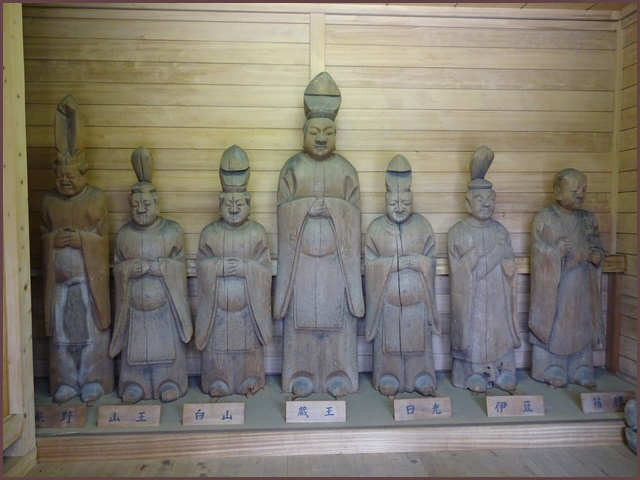
Shichisha Gongen 七社権現 Gongen Deities from Seven Shrines

伊豆権現 Izu Gongen、箱根権現 Hakone Gongen、日光権現 Nikko Gongen、蔵王権現 Zao Gongen
白山権現 Hakusan Gongen、熊野権現 Kumano Gongen and 山王権現 Sanno Gongen.


賑岡町岩殿160 - Nigioka village, Iwadono, Otsuki, Yamanashi
- source : otsuki-kanko.info -


. shichinin misaki 七人ミサキ "Misaki of seven people" .
a legend from Ehime, 温泉郡 Onsen district 重信町 Shigenobu

Once a family of seven went hunting for hawks, (which was forbidden), and even ate the hawk. They were executed by chopping off their heads. Later if people walk by that ground, they will soon encounter some misfortune. The souls of the seven are now venerated at a small Hokora sanctuary as
Shichisha Gongen 七社権現 The Gongen Deities from Seven Shrines .


::::::::::::::::::::::::::::::::::::::::::::::::::::::::::::::::::::::::::::::::::::::::::::::::::::::::::::::::::::::::::::::::::::::::::::::::::::::::::::::::::::::::::::::


- Homppage of the shrine Yuga Jinja 由加神社本宮
- source : yugasan.or.jp


::::::::::::::::::::::::::::::::::::::::::::::::::::::::::::::::::::::::::::::::::::::::::::::::::::::::::::::::::::::::::::::::::::::::::::::::::::::::::::::::::::::::::::::

- - - - - H A I K U - - - - -


. Iwakura matsuri 岩倉祭 "festival of the rock cave" .
kigo for late autumn


::::::::::::::::::::::::::::::::::::::::::::::::::::::::::::::::::::::::::::::::::::::::::::::::::::::::::::::::::::::::::::::::::::::::::::::::::::::::::::::::::::::::::::::

. Pilgrimages to Fudo Temples 不動明王巡礼
Fudo Myo-O Junrei - Fudo Pilgrims - INTRODUCTION .


. Japan - Shrines and Temples - ABC .


[ . BACK to DARUMA MUSEUM . TOP . ]
[ . BACK to WORLDKIGO . TOP . ]

::::::::::::::::::::::::::::::::::::::::::::::::::::::::::::::::::::::::::::::::::::::::::::::::::::::::::::::::::::::::::::::::::::::::::::::::::::::::::::::::::::::::::::::

Middle Way

[ . BACK to DARUMA MUSEUM TOP . ]
::::::::::::::::::::::::::::::::::::::::::::::::::::::::::::::::::::::::::::::::::::::::::::::::::::::::::::::::::::::::::::::::::::::::::::::::::::::::::::::::::::::::::::::

chuudoo 中道  Chudo, the Middle Way


The nine Amida statues at temple Joruji-Ji, Nara teach us 浄瑠璃時


that we do not have to go to extremes in our daily life, but can stay in the middle and take things as they come, one at a time, slowly.


. kuhonbutsu 九品仏 the Nine Buddhas .


- quote
The Central Path, Middle Way or Middle Path
(Pali: majjhimā paṭipadā; Sanskrit: madhyamā-pratipad; Umaylam;Chinese: 中道 zhōngdào; Japanese: 中道 chūdō; Vietnamese: Trung đạo; Thai language:มัชฌิมา mátchímaa) is the term that Siddhartha Gautama used to describe the character of the path he discovered that leads to liberation.

In Mahayana Buddhism, the Middle Way refers to the insight into emptiness that transcends opposite statements about existence.
- source : wikipedia


:::::::::::::::::::: ::::::::::::::::::::::::::::::::::::::::::::::::::::::::::::::::::::::::::::::::::::::::::::::::::::::::::::::::::::::::::::::::::::::::::::::::::::::::


Yakushi Rurikō, Yakushi Ruriko 薬師瑠璃光 resides in the Ruriko paradise in the East.

. Yakushi Nyorai, the Buddha of Medicine 薬師如来 .

Temple Jooruriji 浄瑠璃時 Joruri-Ji
小田原山 浄瑠璃寺


source : www.y-morimoto.com/hananotera

The pagoda with the image of Yakushi in in the East of the compound.

- quote
Jōruri-ji (浄瑠璃寺)
is a temple of the school of Pure Land Buddhism with an historic Japanese garden located in Kizugawa, Kyoto Prefecture, in Japan. It is one of the only remaining examples of a Paradise garden of the early Heian Period.


The three-storied pagoda, the main hall (hondō), the group of nine sitting Amida Nyorai statues and the group of Four Heavenly Kings are designated as National Treasures.
© More in the WIKIPEDIA !

Visiting the temple, the first stop is at the pagoda with Yakushi, to pray for help in this world.
Next stop is the main hall with Amida, to pray for help in the next world.


On the way to the temple is a carved stone image of Fudo Myo-O to make just one wish that will be granted . . .
ichigan Fudoo Myoo-Oo  一願不動明王  Ichigan Fudo
It is about 1.2 meters high.


On the way to the far mountain temple (Oku no In) is another stone statue of Fudo Myo-O


::::::::::::::::::::::::::::::::::::::::::::::::::::::::::::::::::::::::::::::::::::::::::::::::::::::::::::::::::::::::::::::::::::::::::::::::::::::::::::::::::::::::::::::

- - - - - H A I K U - - - - -

The Middle Way: Paul O. Williams’ Essays on Haiku
The Japanese haiku master Bashō once said that
“The secret of poetry lies in treading the middle path between the reality and vacuity of the world.”
For decades now, Paul O. Williams has been gently pointing out a middle path for those in the haiku community who have an ear to listen. He always weighs in with a combination of reasoned thoughtfulness and humor to point out the absurdities of extremes. His essays on haiku contain an irresistible blend of deep insight and plain common sense.

The essays here were selected from a larger group of articles with an eye to furnishing the reader with the full range of Paul’s contribution to haiku thought while attempting to reduce the repetition unavoidable in pieces written over a long period of time and for a variety of purposes. Paul originally published these essays between 1975 and the present. We have tried to select what is quintessentially Paul O. Williams, presenting his insights into current problems of American haiku.
- source : www.graceguts.com


::::::::::::::::::::::::::::::::::::::::::::::::::::::::::::::::::::::::::::::::::::::::::::::::::::::::::::::::::::::::::::::::::::::::::::::::::::::::::::::::::::::::::::::


. Japan - Shrines and Temples - ABC .


[ . BACK to DARUMA MUSEUM . TOP . ]
[ . BACK to WORLDKIGO . TOP . ]

::::::::::::::::::::::::::::::::::::::::::::::::::::::::::::::::::::::::::::::::::::::::::::::::::::::::::::::::::::::::::::::::::::::::::::::::::::::::::::::::::::::::::::::